Here I go again, writing on a topic of which I know very little. BUT, I know enough to have made the decision, for now, not to keep horses at home. There are a number of things I had not considered early on in our horse journey which came to light as I explored the possibility of moving to a horse property and keeping horses at home. For me, these details gave me pause, but for others they may be no big deal.
There are many reasons for keeping horses at home - reduced costs, more time with them, control over their care. The whole thing looks very different if money is no object than it does if you are on a tight budget. For our purposes, I'm going to be practical and assume you are not the type with bottomless pockets.
If you have more than one horse, you can't help thinking about the financial savings of keeping horses in your backyard rather than boarding them. Here in the Metro-West area outside Boston, board is extremely expensive ranging from $1,000 - $1,300 a month within a reasonable distance of our house. It's similar to the economics of day care vs. a nanny. The more kids you have, the more cost effective the nanny option looks.
The first thing we thought about when exploring the option of keeping the horses at home was the monthly cost of doing so. If you do all of your own barn chores, the cost to feed a horse in this area is about $350 per month which includes hay and grain. If you will have nice grass turnout that cost may go down a bit in the summer since they can graze and reduce your hay costs. Hay is about $10 a bale and a horse eats about a bale a day, maybe 3/4 of a bale. Your other significant cost is bedding. You will need shavings or some other form of bedding for your stall. If you have a run in stall, your bedding might last longer than if your horses are kept in all night. Regardless, plan for about $100 - $150 a month for bedding. I'm not including supplements in this discussion since their cost is the same whether the horses are at home or boarded somewhere else.
It looks like keeping horses at home could save us about $700 a month per horse (if you are doing everything yourself) which is pretty significant. But there are a few more costs to consider. First of all, there is the cost of living on a horse property. For us, moving to a town that allows horses would increase my husband's commute significantly and would have taken my two non-horsey sons away from a public school system they love so right there we had a deal breaker. But even if those pieces had fallen into place, we had a hard time finding a property we could handle that would give us everything we wanted. We currently enjoy the use of an indoor arena, several outdoor sand rings, jumps and fields. If we were at home, we would have reduced facilities.
Insurance and manure management are two additional significant costs. I am told by my friends who have horses at home that managing two is really not bad but adding a third horse seems to be a breaking point as far as the amount of mucking required and the quantity of manure you need to dispose of on a weekly basis.
Some rural towns will give you a good break on your property taxes if you are using your property as a working farm so look into the rules. The savings here might compensate for some of the costs listed above.
So now you've crunched the numbers, it's time to talk about the more subjective pros and cons of keeping horses at home versus boarding them. On the con side, having horses at home ties you down. My friends with horses at home are frequently looking for people they can hire to come take care of things when they want to go away for a weekend and it costs quite a bit to hire such a person. I believe they pay people about $100 a day for someone to come muck, feed and often stay overnight. Even when you are in town, horses tie you down. 7 days a week someone needs to be up early to feed them and turn them out. If everyone in the household is willing to take turns getting up and doing morning chores, then it might not be so bad. Horses need hay throughout the day unless they are turned out on grass so someone needs to be around to throw hay and fill water buckets in the middle of the day, everyday. And someone has to do night check, break the ice in the water buckets through the winter, change blankets, take care of emergencies, etc. There are some great devices such as automatic waterers and heated water buckets that will reduce your efforts but at the end of the day, horses need a great deal of care.
Horses don't usually like to be alone. If you have one horse you probably will want to provide the horse with a companion. You can run into trouble if you want to take one of the horses to a horse show or clinic for the day. Some of my friends end up dragging horse #2 along frequently so he doesn't get into mischief being home alone. You need to think through your program and consider what is the best number of horses to have at home for your lifestyle.
On the pro side, having your horses at home can be a great joy. I would love to have ponies in my backyard, to walk out the door and be with them any hour of the day. I would love to be at home more. My dog would prefer to have us home more! I could cook dinner while my daughter rode her horse. I think this becomes a bigger pro as the kids get older, have more homework and trips to the barn take up too much time. We could afford to have two horses if we kept them at home. That's probably the biggest argument in favor of the idea for me. And I assume the bond is much greater when you take care of your own horse each day.
Having a farm is a serious lifestyle choice. If you really want one, then go for it! If you are just trying to find a way to cut costs, make sure you are truly ready for the commitment. If you aren't super knowledgeable, do you have someone you can call if something goes wrong in the night?
And if you're thinking about taking on something bigger, a boarding facility, think again unless you really know what you are doing. I know it sounds completely logical to buy a ten stall barn, rent 8 out to cover your costs and bring in a little bit of money, allowing you to justify having horses. Running a boarding facility is a ton of work and, unless you plan to do every bit of that work yourself, you are unlikely to see a profit. Look into how much you can charge for board. Backyard barns can't charge the same type of board a facility with an indoor and large outdoor rings can charge. Trainers running their own facilities always say they break even or lose money on the board and make it up with teaching or running shows or hay sales or some other horse adjacent business.
The other issue with running a boarding facility is that your home is no longer your own private space. You will have people there all the time and often those people will feel entitled to tell you what to do and to ask you to change your home to please them. I think I'd have a difficult time with this aspect of taking in boarders.
If I haven't talked you out of it yet, then good luck! I'm jealous! And I really hope to follow in your footsteps some day.
Showing posts with label buying a horse. Show all posts
Showing posts with label buying a horse. Show all posts
Tuesday, May 31, 2016

Friday, June 19, 2015
Leasing: A look at the viewpoint of the lessor rather than the lessee.
I had quite the negotiation with my husband when I finally convinced him to buy a horse for me. He was not interested in the maintenance costs on a second horse so I took on some work at the barn to cover some of my board. I am the show secretary and webmaster as well as doing a few other odds and ends. The deal is that I need to find a lessee to ride my horse 3 days a week and pay the other half of my board.
When I leased a horse two days a week, my perspective on the whole situation was so different. I loved the horses I leased. I loved them as though they were my own and tried to be communicative with the owners and defer to their various care choices. On the lessee side of the fence, I didn't love that I wasn't in full control. In the case of both horses I leased, the owners decided to ride more and I lost access to the horses.
So now I am the lessor. I've only had my horse for one month and 6 days. I'm still getting to know him and I've been so busy with my new responsibilities at the barn that I haven't had as much time for him as I would like. Regardless, the pressure is on from my husband to find a lessee.
I have a friend who may be interested in leasing Crafty for herself or her daughter. She came by the other day to take a lesson on him. It was really difficult for me. I don't necessarily want to share him. I want to be his person. If I share him, he won't know he's mine. I had a hard time watching my friend lead him and tack him up. I'm very particular about how he is lead. He's not allowed to wander, drag his person off, start grazing, etc. I'm working to establish myself as his leader on the ground and under saddle. Will leasing my horse undermine that work?
My friend did a great job riding Crafty and I think she had fun. She will likely try him again but I'm not sure if he will work out for her or her daughter. They use a different trainer and I only want one trainer working with my horse, especially during the first year when we are still getting to know him. Having two riders is confusing enough. Two trainers, two different agendas and approaches, would not be fair to the horse.
I think there will be someone wonderful who wants to lease Crafty. He's a nice horse. But I think it will be interesting to see how people feel about the cost. He can be ridden 6 times per week. I will ride 3 times and lease him out for 3 rides which is a half lease. From where I am now sitting, half of board and $100.00 towards shoes sounds like a bargain. I am paying for all supplements, most of the shoes, routine vet care. I am providing really nice, brand new tack. I am providing a lovely horse, boarded at a barn with awesome facilities for riding.
I will require my lessee to take one lesson a week, at least for the first 6 months. I will also require them to do at least two sessions with our natural horsemanship trainer so that we are all on the same program. My poor lessee. I'm starting to feel sorry for her already.
If my lessee ends up being someone who wants to take Crafty to shows or camps, I will expect them to contribute to maintenance type veterinary care such as Adequan or joint injections. The reality is that my level of riding is putting very little wear and tear on the horse. I will also ask them to have their own saddle pads. I hate washing saddle pads. I don't really want to do it when I don't even get the pleasure of riding!
I think I'm ok with my lessee taking my horse places even though it feels terribly wrong. I will have to get over it but I feel like he's one of my children. I've been a stay at home mom for 17 years. I have rarely spent a day without at least one of my children. I don't know how people who are divorced with joint custody do it. On the one hand it looks so glamorous to have every other weekend to yourself but on the other hand, it would feel like a limb was missing.
This post seems to be more about personal therapy than about leasing a horse but if you are out looking to lease, I'm hoping my thoughts will help you think a little more kindly of the horse owner and the price they set for sharing their precious steed with another rider.
Monday, June 15, 2015
Distance: Buying a horse from far, far away.
If you read my most recent post, you know I found my dream horse in Canada. He checked off everything on my list of qualities I wanted in my horse except convenient location so I just decided that I had to go for it.
Buying a horse from far away and from another country is a little complicated but nothing I couldn't handle (says the naive first time buyer). There were three hurdles I had to get over - the vetting, transportation and paperwork for the boarder.
I flew up to Toronto with my trainer to try Crafty and we both loved him. I contemplated going back up for the vetting and possibly even driving my trailer up to drive my horse home but it was at least a 12 hour drive each way and I had no idea what it was like to cross the boarder with a horse. In the end, I wanted to get things moving forward and didn't have the ability to go back up for the vetting with my husband traveling and three kids to think about.
The trainer who showed us the horse was great. She crosses the boarder frequently to show in the US so was pretty unfazed by the process. I found that comforting. She gave me a long list of vets I could call and was very honest about which vets she uses and which she didn't know at all. I chose the vet closest to the farm where Crafty lived which was 20 minutes away. It was seriously remote and the other vets were an hour to two hours away. I had no references for this vet but she had come from Kentucky, was used to working with race horses and I decided expediency was worth the risk of an unknown vet.
The vetting was incredibly stressful. I hated not being there. The vet was actually great, especially at working to represent my interests. A couple of little things concerned her and I was trying to decide if I wanted any x-rays but she had to leave for an emergency call. I worried about letting her leave without doing x-rays so I called my vet in a state of rookie panic.
My vet, who was in the middle of showing her own horses at a jumper show, was wonderful but I was a train wreck. She was watching my videos between classes and texting her office to tell them what x-rays she wanted to see. I was upset because I just wanted my horse and I felt like for his price and for what I wanted to do there wasn't anything we were going to find that would keep me from buying him.
The Canadian vet went back the next day. We discussed her concerns and decided to x-ray the horse's left leg starting at the hoof and working our way up to the knee. That was the extent of what we planned to look at and my vet was comfortable with that and with the reasoning behind the decision. I didn't want to spend so much on the vetting that I wouldn't have anything left to do maintenance type things later. I felt I would rather get my horse home and have my vet watch him go and do x-rays here. I have no doubt he will need some joint support or injections of some kind but none of that worries me and he is sound on hard ground so what could go wrong? Also, the back x-rays my vet was interested in could not be done with the old equipment available to the Canadian vet. Again, I felt if we needed to do those X-rays at some point I preferred to do them at home with the treating vet having control over the images taken.
This is not necessarily a wise way to go about your vetting. Ideally, I would have been there. In a perfect world I would do X-rays, take it one thing at a time and make informed decisions. However, at my request, the horse would not be ridden again until I got him home. Right or wrong, I wanted to move quickly. If I were buying a more serious competition horse or spending a larger sum of money, I wouldn't have done it this way.
 In the mean time, I was dialing the numbers of every transport company in Canada trying to find a truck heading south. They were awful. No one was calling me back and they kept telling me how busy they were driving horses north from Florida. I thought that was a bit absurd since surely the trucks had to go back south! Eventually one of the companies directed me to another that carries race horses down to Saratoga, New York pretty regularly. That did the trick!
A good transport company makes the whole thing so much easier!!!! I used Doyle's and they were great. They went up to get Crafty on a Tuesday afternoon and kept him overnight at their base near the border. Wednesday morning, they took his papers to the government office to be signed and crossed the boarder. I met them in Saratoga that evening, loaded Crafty onto my trailer and headed home.
The paperwork isn't terribly complicated I'm happy to know now. I had the vet rush the coggins so that took a couple of days. Then the vet's office did a health certificate. Someone needs to take the health certificate to the government office to be stamped. The trainer would have done it but it was quicker for us to have the transport company do it because their base is less than a mile from the office.
I have a friend who spent the early spring horse shopping in Florida, South Carolina and Virginia. She was looking for two horses - one for her and one for her daughter. She felt pretty strongly about being present at the vetting and ended up walking away from a lovely horse because of a side conversation she had while she was there. Another horse she vetted long distance but a trainer she knew well was there on the ground to make sure everything went well. That horse ended up not working out either but for different reasons.
Buying horses is emotionally challenging. The addition of distance into the equation simply increases the complexity of those emotions. If you are a first time buyer, try to find something within reasonable driving distance. Think about the cost of travel, time, emotional distress and wear on the horse when considering whether to save a little money by going a little farther. And be certain to involve your trainer or other chosen horse expert! It probably cost me $500.00 to bring my trainer with me to Canada but I would never ever have bought a horse, especially at that distance, without her consent. I just don't know enough to do it on my own and I need her to ask the questions I don't think of regarding work history, fitness, soundness, etc. I also needed her to ride him. She has ridden countless horses over the 30+ years she's been riding so she has a much more developed ability to feel a horse out and see what he's about.
If you need to buy a horse from far away, go for it. Take a deep breath, be patient and work through the steps. Surround yourself with people who know what they are doing and listen. And good luck!
Friday, March 6, 2015
No Middle Ground With Horses: Why there are so few in between opportunities for kids who want to ride.
I frequently meet parents of horse crazy kids who want to provide more equestrian opportunity but don't have the bandwidth to dive in head first. I've often lamented the fact that this sport doesn't accommodate incremental increases in commitment. However, I'm seeing things differently lately and want to share why I've changed my mind.
You can't be an in between horse person. The people who have been the most successful in any equine sport have done so on the backs of horses they knew intimately. They start these horses themselves rather than buying made horses. They spend so much time with their horses and see them everyday in every situation so that they know immediately if something isn't right. It's akin to our relationships with our kids or our partners. I can tell when not to ask a favor from my husband or if my oldest isn't feeling well but is gutting out a race nonetheless. If you go in halfway you lose that connection and barometer.
There is no middle ground because you either own a horse or you don't own a horse. Of course, there are people who half lease or share horses. Horses are very expensive so it is unrealistic to think everyone who wants to ride can simply buy and maintain a horse. Sometimes the perfect half leasing opportunity comes up and those are fortunate circumstances. With a 2 - 3 day a week commitment, the child is able to learn more than if she had just been taking lessons but without giving up everything else in life. That's great. And for some people they simply can't afford more and I get that.
However, and this is where I may lose some of you, you don't become a horse person by doing it part time. If you want to be a horse person, know the ups and downs and be a true steward of a wonderful living being, it's a full time job. It is a choice that eliminates other choices from your life. Riding horses should never be like playing soccer or tennis. It should never be something you show up to do for an hour and then off you go to do all your other things in life. Such an approach is disrespectful to the incredible gift the horses give us by letting us get on their backs and train them, learn from them, work with them, pour our secrets into their ears and dry our tears on their coats.
Our world today approaches everything as a disposable commodity. We are accustomed to instant gratification and tossing aside things that don't work. Horses defy that evolution. It takes forever to learn how to ride and care for a horse properly. And I mean forever!!! And when a horse isn't doing well he's more similar to your child than a piece of equipment. You might dump a $3,000.00 saddle if the horse doesn't like it but you never just dump a horse. You care for it, you do everything you can, consult everyone you know and you hope that when it is time to give up the people around you will tell you because it is unlikely you would be willing to give up without a crazy fight. And giving up can take many different forms. For some that means retirement to a field to live out his days in relaxed bliss. For others it means rehoming to a therapeutic riding program or as a trail horse. And for those beyond help, it means ending their suffering. None of this is easy.
My point is that the real value of embracing a horse sport for your child is that it isn't simple. You don't just sign up. This is a commitment that will teach your child the true meaning of commitment. When it's 11 degrees someone has to break the ice in the water bucket. When it's 20 degrees but the horse has an abscess, someone needs to go soak it and get their hands wet. Someone needs to take their gloves off to poultice the hoof after soaking. And when it's 95 degrees and humid at the end of a long horse show, someone, has to muck out the stall and reload the trailer. That my daughter has never once complained about being the one to do all of this and much more indicates her preparedness for the world and anything it can throw at her.
The better a rider knows a horse, the more prepared the rider can be if something goes wrong. A rider who truly knows his horse will not go out cross country if something is wrong but first you have to know the horse to know that something is wrong. At this point, as a parent of a kid who likes to ride, you will rely on a trainer to know if the horse is off or if the child shouldn't be going out. But if you rely on that trainer forever and for everything, you and your child will not develop your own gut instincts about what not to do or when something is wrong and developing those instincts is what will make your child a horse person rather than a kid who takes riding lessons. You need the trainer but you also need to develop your own knowledge. You are responsible for the child so ultimately you are responsible for the horse. Pony Club is a great resource for parents and kids to learn the things they need to know to be responsible horse stewards.
As parents of horse kids we are not raising horses so we do buy horses, ostensibly with experience in the sport our child is pursuing. It takes at least a year to get to know the horse. Anything that you do in that year is a bit of guesswork. Some horses take longer to know but a year can give you a good idea of how things are going. But that's ok. That is how we create a learning opportunity for our kids. If they continue in the sport there will come a time when they need to build a horse from the ground up, put in the years of work and build the long term relationship but first they need to become horse people.
And one final thing parents of equestrians really need to understand. This is a lifetime sport. Most kids won't play soccer or football past high school and even fewer past college. Gymnasts and skaters peak in their teens. Equestrians peak in their 40's and can still be at the top of their game in their 50's. It takes that long to learn enough to develop your own horse. A horse takes at least 10 years to develop to the top levels of eventing and often more. So if you are a parent who has a lot tied up in your kids' athletic achievements, equine sports might not be all that fulfilling for you. The hunter and equitation world does provide classes for kids and there is hefty competition and a huge amount of money being spent so kids can win medals. But all of that misses the point of horses and raising horse people.
Life with horses, especially for kids, shouldn't be about ribbons. It should be about connection, love, hard work, barn life (which is usually a boy free zone and a great place for teenaged girls) and learning about horses. If your child truly wants to be a horse person, find a way to help her. I can't think of anything better for a kid than hard work with a healthy, happy equine friend as the reward.
Thursday, February 19, 2015
Silver Linings: The things we learn when our horses can't work.
I was giving a friend an update on Quizz the other day and realized just how big a blessing Quizz's issues have been so thought it was worth sharing the upside to rehabilitating a horse now that I can see the upside!
For most of January we took one step forward and two steps back each week. It's been difficult to pin down the issue. Winter inflicts enough stiffness on its own, exacerbating the question of whether there is a real problem or just an environmental one. We had some good days. Quizz no longer cross cantered (rather than bringing both inside legs forward together, the horse brings the front inside leg and the hind outside leg forward together). She was doing better with her canter transitions though frequently exploding on the lunge line before picking it up. We would have a good day followed by a day she didn't want anyone on her back. We panicked that the saddles didn't fit but it turns out that wasn't really the biggest issue. We did what you do with horses; we tried different things until we found a way to make things work.
Quizz has now been shod twice by her new farrier. She still definitely has something going on in her right SI. She won't let the farrier bring her right hind leg up under her so he has taken to doing all the work on that leg out behind her and she is much happier. She is growing a nice amount of hoof in front, less behind. He estimates it will take 6 - 8 months to get her feet where he would like to see them.
In the mean time, we developed a routine that seems to be working. My daughter lunges Quizz for 10 - 20 minutes before every ride. The goal is to achieve 2 smooth canter transitions on each side before working under saddle. Some days this takes longer than others. Quizz generally explodes at least once, leaping off the ground on all fours, bucking and taking off around her circle or another more creative shape. Some days she explodes 3 or 4 times. As we implement this routine, the lunging duration continues to vary but definitely improves each day.
As I mentioned in my post on lameness, lunging is an important skill but one we often neglect. It had been on our list to work on for over a year and we did work on it a bit but usually our trainer would lunge the pony or horse, Elizabeth would watch and take over the lunge once we were sure things were going well and only at the walk and maybe the trot. Over the past few weeks Elizabeth has developed her skills immensely. Our trainer now sits at the side of the ring while Elizabeth handles the lunge line. When Quizz explodes Elizabeth calms her saying, "Easy," and brings her back to a controlled trot or canter. Four weeks ago Elizabeth was afraid to really swing the whip at her. Now she uses it to insist on a consistent tempo in the trot and on picking up the canter. The transitions are still not timely but they are getting better. And the best part is that Elizabeth is solving a problem on the ground she struggles with in the saddle: respect! The ground work is making Quizz respect her young rider. The more Elizabeth insists on the canter transition on the lunge line, the better Quizz's canter transitions go under saddle. I am so incredibly proud of my 12 year old daughter as I watch her master this skill and work with her horse to build a relationship and mutual understanding.
When Elizabeth sits on Quizz's back, the horse is already warm and loose. The ride begins with stretching Quizz at the walk on 10 meter circles in both directions. She's very tight through her rib cage so Elizabeth is learning to not just use her inside rein but to really use her inside leg to bend Quizz's body. This is also improving. Elizabeth is not big and heavy at this point so making a horse respect her leg has been a challenge but she's getting some results. She absolutely has to get Quizz round and using her body properly at the walk before she can trot, and at the trot before she can canter. In the past we've let the roundness and contact slide since those are difficult riding skills to master. But now it is too important for Quizz that she engage her core during work and that she is not allowed to hollow her back. By the end of their rides, Quizz looks wonderful! It takes an awful lot to get there but she develops a beautiful, forward working trot, a nice long and low stretchy trot and lovely, smooth canter transitions.
The next step is to increase Quizz's work load. Right now the weather is just miserable. Quizz is doing very good work but often it's every other day. By the beginning of March we will start working 5 days a week and, soon after, 6 days a week. The duration of work will increase and hopefully by then she will be able to reduce the amount of lunging and even begin to jump again but we will be patient and let the horse determine the pace.
It's actually very interesting to watch this mare's progress. She has had moments that she was not exactly cooperative which bothered us because she generally has a great attitude. I have sensed a shift recently as though she feels like we finally figured things out and are giving her what she needs. I believe she loves working, she loves eventing and she loves my daughter. So I'm extremely optimistic we will get there and hopefully in time for a great season.
So in the end this whole thing has been a blessing in disguise. It’s actually great seeing the things Elizabeth is learning during this rehab period that she wouldn’t have worked on if Quizz had been perfectly healthy. If she had been healthy we would have been working on jumping position, jumping higher, no stirrups, etc, all valuable things we will get to but I feel like the things she’s focused on instead are the things we easily skip over or don’t fully embrace and perfect because we all have limited time. We always say we need to work on lunging but until the horse forced us to go there we weren’t doing it in a way that Elizabeth was really learning and taking responsibility for. I’m so proud of her. You should see Quizz being totally ridiculous jumping up and down and taking off all crazy and Elizabeth telling her easy and bringing her back without a care in the world. It’s hard to believe my daughter is only 12 years old sometimes.
Thursday, February 12, 2015
When Horses Aren't Fun: How not to end up with an inappropriate mount for your child.
I suppose there are many times we question our involvement with horses, especially during a New England winter! But my topic today centers on the pain of choosing the wrong horse. Too often a parent is willing to buy their child a horse but without the necessary support they can make an inappropriate choice. Once that happens it is very difficult to undo the damage. It is unfair to the kid and it is unfair to the horse.
The first pony we leased for my daughter was appropriate for the sport we leased her for but when we changed sports, the pony was no longer a safe choice. She dumped my daughter several times before our trainer wisely said enough. This is the point at which parents are tempted to make a huge mistake by not listening to our experts. Our experts want the best for us. In my case, the trainer had not one thing to gain by a horse change since she neither buys nor sells horses nor does she take a commission on any purchases. Fortunately, the pony we had was wanted for the job she knew and we were able to send her to a good home. Too often when the horse doesn't work out it is difficult to find them a new situation. It can take a very long time to rehome an unsafe horse and all that time you will be paying for board, shoes, vet costs and possibly training for a horse your child isn't riding or is riding in a limited way. The wrong horse will prevent your child from doing the things she wants to do. An uncooperative horse will make Pony Club or horse shows nearly impossible and if you do manage some schooling shows, your child will find it difficult to move up the levels or to go to rated shows and after awhile, you will resent the horse. You will also watch your child's confidence deteriorate and she very well may become so afraid she no longer wants to be involved with horses.
I've watched a few families suffer negative experiences. One family I know has a one year lease, two daughters who want to ride and very little knowledge about horses. Older, more experienced people can ride their horse but the girls who lease him really shouldn't. Even some trainers don't want to ride him because it isn't worth getting hurt. One of the girls came off the horse and broke her foot shortly after they got him. The family is stuck with the horse until the end of the lease and they are trying to do what they can, engaging a trainer to ride him. The biggest mistake I saw this family make was not having help right from the start. They waited months thinking they knew enough.
Let me tell you right now that if you have spent less than 6 days a week over at least 5 years with a horse you have no business owning one without professional help! They are complicated and there is an endless amount you need to know to handle the variety of situations that will arise. If you have a backyard horse for your kids you need Pony Club. Run, don't walk, to your nearest Pony Club and start learning what you need to know.
Another family has a daughter who is a bit more experienced and has had a very tough horse for a few years now. She handles him extremely well but hasn't been having any fun at all. Every ride is exhausting to watch. He always misbehaves, is very out of control and it is not a training issue. Her mother, who grew up with horses and Pony Club, has finally started looking for a different horse but even she is wondering what took her so long. They wasted several years on a horse that was never going to be a good partner for her daughter. I'm amazed the girl still wants to ride! They will not be able to sell the horse and plan to donate him to a collegiate riding program. Woe be the rider who draws that horse in competition!
Let's take a moment to think about the cost of the wrong choice. Board where we live is about $1000 a month, shoes range from $200 a month on up, the vet is about $1000 a year in a good year with no issues and then we have lessons and training costs which would be a minimum of $70 a week or $3600 a year. So a free horse costs you no less than $18,000 a year to support and honestly it costs more than that. So the thought of spending all that time and money for something that is not fun, stresses you out, endangers your child and has no easy out is ludicrous! But there is a solution!
I will start from the premise that it is always possible to find an appropriate horse for every kid. That does not mean that it will be quick or easy to find the right horse. And even wonderful horses have bad days. You will find many people who grew up with horses that threw them off, refused every fence, never came to them in the paddock and on and on. Some of those people would argue that they learned more from those naughty horses than they could have from the kind who take care of their rider. Well, I beg to differ. You don't necessarily learn more from either kind but you do learn different things. In most of those cases, someone, usually not the parents, gave those kids horses that were then kept in their backyard. Most of those parents didn't make conscious choices about the horse they had. It was a different time. And I would warn you about any "free" horse that crosses your path. As mentioned above, the upkeep for a horse is far more significant than the cost of an appropriate mount for a child assuming you aren't trying to be competitive on the A Circuit or in the Pony Division so if you are willing to support a horse, be willing to provide a small budget for the purchase.
I would argue that as equine parents our priority is to give our children the opportunity to experience life with horses and all the wonderful things that can come from that in the safest way possible. This is especially important if you are a parent with limited knowledge of horses, even more so if you have limited access to help. There are 2 primary qualities that stand out as determining the safety of any particular mount. The first is a good brain. You will hear this often with horses. It generally means the horse is intelligent, doesn't spook each and every day at the same exact bush it has lived next to for 5 years (I used to ride a horse that did this and it was annoying rather than unsafe but would have been very unsettling for a child). A horse with a good brain will try to figure out what you want him to do and will know when he has a kid on his back and how to behave. The second quality is experience. You can buy a young horse that will miraculously have such a good brain that it doesn't need experience to be a safe mount. However, it is best as a non-horsey parent to stick with slightly older, experienced horses. A horse that has already done everything you want to do with it will not be surprised. It will understand what's going on each day and can help your child along as she's learning. An older horse will need more maintenance but I promise it is well worth the trade off!
Before you choose a horse, know what it is you want to do with the horse (hunters, equitation, dressage, eventing) and look for a horse that has a record at that sport. If at some point this changes, be aware you might need to change horses as well. For instance, we leased my daughter's first pony to be used in the hunter ring in the short stirrup division. She was only ridden in smallish, enclosed rings. My daughter then switched to eventing. Suddenly the pony found herself in wide open spaces somewhat far away from the barn and with no other horses in sight. Asking her to change sports was actually unfair. She would have needed a great deal of training in order to succeed in a new sport and it just wasn't worth it so we sent her back to the short stirrup division where she has kept her rider very happy.
Once you identify the sport, identify the place you will board the horse and the horse professional who will help you with your horse. Have a discussion with any potential horse professionals and ask about their approach not only to finding the right horse but to caring for the horse once you have it. If you need help, is this person interested in helping you or does he or she primarily offer lessons and leave everything else to the owners or barn manager? Our trainer is a resident trainer at the barn where we board and she gives my daughter lessons, gives our horse training rides and provides a ton of invaluable support and advice. She is never too busy and is incredibly generous with her time and knowledge. In some cases your horse professional will lead you to an appropriate horse. I know one eventing trainer who specializes in half leasing schoolmaster ponies to kids for the introductory levels. At a certain point they need to acquire their own horse but this is a great way to get started. Our trainer does not act as an agent in horse sales but she does assist her clients by helping them identify the characteristics they are looking for in a horse, looking over ads brought to her by clients and going out to look at horses the client has identified as potential options. This process is extremely educational. Even though it can take a great deal of time to search for horses and visit them only to be disappointed by what you find, each horse you look at teaches you something about what you are looking for and which qualities are the must have qualities.
There are many places to look for the right horse. There are great websites out there with horse listings and people at your barn will often know of good horses for sale. Pony Club is a great resource for finding horses for kids. Any ad that mentions a horse has been used for Pony Club rallies and/or ratings, especially if they have done rallies in multiple disciplines and ratings above the D2 level (which means D3, C1, C2, etc.) that tells you this is a kids' mount. There are classified ads on the Pony Club website and many local clubs or regions keep their own classified ad pages. From there it really depends on what you plan to do with the horse. USEA (US Eventing Association) has websites by Area with great classifieds. Sport Horse Nation is another classified site dedicated primarily to eventing horses. I am sure there is an equivalent in the hunter, equitation, jumper and dressage disciplines and a good web search should help you find them. In addition equine.com, dreamhorse.com and others have a huge assortment of classified ads. You can narrow it down by price, location, age, etc.
The next thing you need to determine is what does the right horse look like. Color, breed, even gender and size are all things you need to be willing to let go of in your search. It's ok to have a preference but if you want a bay gelding and the perfect grey mare appears, you buy the perfect grey mare. High on my list of qualities are good ground manners, willingness to get on and off the trailer and willingness to stand for me when I pull his mane or clip him. These are the things that will make my job as chauffeur and groom easy and since I'm paying the bills, these are by and large non-negotiable. I can say that because my daughter is riding at a low enough level that we don't need some kind of insane speed or jumping ability. In fact, those would be negatives at this point. For a first horse you want one you have to really kick to make it go rather than one you are always pulling on to slow it down. As I mentioned earlier, experience is essential. If you plan to ride in the open, buy or lease a horse that has evented or done hunter paces. If you plan to do dressage, buy a horse that knows how to be ridden with contact so that your child can learn from the horse. Ask parents of kids doing the sport your child wants to do what they most value in their child's horse. Work with your professional to hone the list and prioritize it. You should have a few non-negotiable qualities, several desirable qualities and a few preferences you can live without but can be kept in mind during the search.
I'd like to say something her about gender. Some people will only buy geldings and others will only buy mares. We've had both and here's what little I can decipher about the difference. The boys may have an opinion but they are pretty willing to give it up if you insist. The girls on the other hand tend to hang onto their opinions. They are more willing to stick to their guns and have an argument with you about who's way is the correct way. Our trainer is a big fan of geldings and my daughter's amazing pony was a gelding. When I found our lovely mare our trainer was determined not to like her. She tried everything to make the horse angry or to find an issue. But our mare is just lovely. She has the world's best attitude and tries her heart out every day. She is definitely bossy and opinionated but she's so wonderful we can live with that. She is also quite amorous of all the boys when she is in season which seems like pretty much most of the time so we live with that too. So gender can be one of your non-negotiables but I hate to think we would have passed on Quizz because she's a girl. It would have definitely been our loss.
Before you head out to try any horses, set a budget. Depending on what you want to do, a first horse should cost between $5,000 and $10,000. Backyard ponies can be cheaper, show ponies (meaning hunter division) will be far more expensive. We paid in that range for our pony and quite a bit more for my daughter's current horse. This may vary depending on where you live. Remember a more flexible budget will give you more options but you really do not need to pay a whole lot more to get a first horse. And don't expect to buy one horse and be done. Again, it all depends on what you intend to do with the horse. In our case my daughter needed one year with an experienced pony we knew she would outgrow. We bought a pony, lost a little selling it (as we knew we would), and bought her wonderful next horse. This horse should last her awhile if she can stay sound. It's a little bit like buying a house. You start with something small and then after having 3 kids you outgrow the tiny house and move somewhere a little bigger. If you try to buy one horse that will be all things from beginning to end you will have to make concessions somewhere else. Either you will pay more for talent you won't be using until some undefined time in the future by which time your child may not even be riding or the horse may not still be sound or you will buy too much horse - too big, too strong or fast - wanting to make it last only to defeat the whole purpose of trying to buy the appropriate mount. Don't do it! If you are really concerned about buying and selling on a rather short horizon, find a horse you can lease.
Regarding the search for the horse I just want to mention something about looking at ads and videos. Look at horses aged 8 - 16. The older horses should cost less and you should plan for needing to retire that horse or free lease it out to kids when you are done until he can't work. Many horses can keep teaching kids well into their 20's. When you look at videos, make sure you are looking at a child riding the horse in a situation comparable to what your child will be doing. I often found the videos were of professionals riding the horse. I would ask to see a video of a kid jumping the horse in a field. If the video is less than 10 seconds long, they might be hiding something. They might not but it's something to keep in mind. I'd rather see a horse jumping clumsily but safely with a kid on its back than beautifully 3 levels above where my child is competing. Even better is seeing both!
After you identify some horses you are interested in, call the owners or agents to chat and set up a time you can take your child and trainer to ride the horse. If the horse is nearby, try to visit on more than one day. This is a huge long term commitment, take your time and gather all the information. When we look at horses, usually the current trainer or rider will get on and warm the horse up, show off his jumping or lead changes, etc. Then both my daughter and our trainer take turns. If we go a longer distance and our trainer can't join us, I might hop on just to see if I feel like the horse is scary or not. I'm not much of a rider but I can at least gather one more data point. I would never buy a horse my trainer hasn't sat on but I might have to do the first visit without her. I always let the people showing us the horse know ahead of time that I need to see my daughter jump the horse in an open field. Often this has to be done on a different day since not everyone has a cross country field available on their property. However, I wouldn't ever buy a horse without having seen my daughter jump it in the open. Jumping in the open is a big part of what she does with her horse and it's the activity that leaves the most opportunity for something to go wrong. After the ride I like to go into the barn and be part of the untacking experience, especially if they already had the horse tacked when we got there. It's important to see how the horse behaves in the barn, on the cross ties, etc. Sometimes you will gain little snip-its of pertinent information such as the horse can't be cross tied! It may be a manageable quirk rather than a deal breaker but such a thing would surely warrant consideration and further investigation.
I'm not going to get into vetting and all the other things involved with buying a horse. Everyone has their own perspective and I'm really just focusing on how to make sure you're making a safe choice for your child. If you do make the right choice, your child will have fun and thrive while learning from a lovely animal. She will likely improve her skills quickly and be able to move up the levels and gain confidence. If you don't make the right choice, be patient but not too patient. It takes a year to get to know a horse. There are so many factors - change of environment, different riding style, new schedule, new farrier. Give the horse a chance. If you did your homework then you chose this horse because you believed it was the best choice. Give it some time. On the other hand, listen to your gut, your child and your horse professional. If the horse demonstrates dangerous behavior, take it seriously. Don't be afraid to say we made a mistake and to take steps to relocate the horse and start over again. Don't waste 3 years with the wrong horse making a bad situation worse. It's ok to acknowledge when it isn't working and to find a way to move onto a better fit but be responsible to the horse in the process. In reality our kids are home with us and riding for a very limited number of years. Try not to waste them!
Tuesday, February 3, 2015
What About Me?: When mom wants a turn to ride.
 |
| Elizabeth on Sabrina with me on Toby. |
I know quite a few moms who have been riding all their lives. Their daughters discovered horses through their mothers and it was only a matter of time before they were both riding. Many of these women now keep their horses at home. Horses have always been a priority for them so when they realized there was a need to support more than one horse, they built barns. Oh how I wish 15 years ago when we left the city I had opted for land and bucolic bliss over suburban convenience. I'm now stuck in the town we live in until my kids graduate from high school so putting horses in my back yard is not an option.
If having horses in your backyard is an option, it's a great way to make riding more accessible for multiple family members. With horses at home you save money on board and have the convenience of being able to ride whenever you want (unless it's winter 6 months of the year and you live in New England with no indoor). Just having Elizabeth's horse at home would mean she could ride while I cook dinner! But beware! Having horses at home is a huge commitment. I won't go into all the gory details but just a few of the things I've discovered one needs to consider when keeping horses at home are enough to put most people off. Among them are manure management, insurance, never ever being able to go away or paying an extra $1000 for barn help to be away for the weekend, being the one to wake up to feed the horses 365 days a year and the one to do night check the same number of days no matter the weather, state of your health or other things going on in your life. Perhaps at this point it is just as well that I can't have horses at home since I'm pretty sure I'd be in over my head!
 |
| Elizabeth on Pumba with me on Nugget. |
When we bought Elizabeth's horse last fall my husband assumed we would share the horse. I know a couple of other moms who are looking for horses to share with their kids. And my two cents on this topic is that is doesn't work, at least not for us. It certainly can work depending on your goals. For our family, we have chosen to support Elizabeth's riding goals. Those goals are pretty lofty and require her to ride often. Our horse works 6 times a week. We try to have our trainer ride her once a week which leaves 5 rides for Elizabeth and me to split up. Well, if I'm lucky, I can have one. And that is definitely the way it should be. Quizz is Elizabeth's horse. This is Elizabeth's sport. They need to work hard in order to be ready for Pony Club certifications and horse trials.
 |
| My favorite view - of my daughter on her pony through the ears of an awesome horse! |
since my daughter's horse has had so many issues - expensive issues - I don't think he will ever be willing to own two horses. The most I can hope for is that another horse will come along with an owner willing to lease him or her out a couple of days a week. Some day, when Elizabeth needs an upper level horse and Quizz has finished doing her job with Elizabeth, I will have my turn. Quizz and I will live out our twilight years on the trail together. Until then I will get my horse fix living through my daughter - watching, trailering, grooming and paying.
Thursday, January 29, 2015
Equestrian Dads: How to manage non-horsey family members!
First of all, let me say that I am aware there are fathers and sons who participate in equestrian sport and I am envious of those families. However, the overwhelming majority of us are more familiar with the mom and daughter scenario so that is the one I will address.
I myself have a husband and two sons who DO NOT PARTICIPATE IN EQUESTRIAN SPORTS. I actually cannot emphasize that enough. I require them to attend one show per season and I try to make it a show that is close by and exciting, usually a full event with some cross country jumping to watch. This past summer I also made all of them volunteer at the horse trials our barn hosts which did not turn out to be a total disaster though my track running son sprained his ankle and blew much of his season! Likewise, Elizabeth and I attend at least one Cross Country meet or track meet per boy per season. Everyone seems pretty content with this arrangement.
In the typical situation such as ours, one must always be thinking about maintaining the balance and familial support for a sport that seriously skews allocation of resources. My daughter's sport - eventing - takes a huge chunk out of both our family financial resources and my time since I am her groom, Pony Club sponsor and horse taxi driver. While I drop my sons off for karate and they participate in sports at school, I take Elizabeth to the barn 6 days a week and sit there while she does her thing. Eventually, and quite soon really, she will be old enough to drop off at the barn but the distance means there is little point in trying to go home and come back again. Most weekend days we are out doing something with Pony club or off at a show so the boys are on their own and my husband drives them around, cooks, grocery shops, does a terrible job with my laundry. And the cost of horses, board, shoes (horse shoes, known around the barn as Jimmy Choos because wishful thinking isn't a crime), saddles and lessons means I can never buy enough running or karate gear to make everyone even so I just let the boys have a blank check for running gear. How much could it possibly be?
I work hard to keep up with Elizabeth's horse needs and to not absolutely neglect my boys and husband. We have actually set up a routine that works really well for us. Through all of it though, I never lose sight of what a key member of the team my husband is, even if he is an absent member to a great extent. The reality is that I don't work, my husband hates horses, and he is paying enormous sums of money to support our daughter's passion. My husband is successful but not so much so that we don't feel the pain of the expense of owning a horse. We have to make other sacrifices in our lives in order to provide this opportunity for our daughter. We are happy to make those choices. In our case they aren't that terrible - we don't take big vacations, the kids don't go to private high school (they did go to private middle school), and we won't be redoing our kitchen or bathrooms.
So when I think about the horse Dads and how to get them to jump down the rabbit hole and then persuade them to continue throwing money into what is clearly a bottomless pit, these are the things that seem to keep my husband on board:
1) Our daughter never has a day she doesn't want to go to the barn. She never complains about needing to go ride or lunge her horse, even when it is 20 degrees or when it is cold and raining or so hot she feels like she's melting. How can you say no to a kid who wants to go get dirty and work hard no matter how unpleasant the day may be?
2) Horses are clearly Elizabeth's passion. Our daughter works hard. When it comes to the horse and Pony Club she is focused, determined, and tireless. If she isn't riding she's cleaning tack or studying for Quiz Rally (see past post on Pony Club) or her next Pony Club rating. How great to find your passion and have the ability to pursue it at such a young age!
3) Horses don't engage in social drama. Middle school is awful. Our daughter transitioned from private elementary school to public middle school. She got her first pony just before the transition and it saved her from extreme heart ache. Everyday I pick her up from school to head to the barn. Some days at school are ok and some are awful. That's the scale. So we head to the barn, she does her thing, and presto, happy adolescent child. Any amount of money is worth it if gets her through middle school unscathed.
4) There are no boys at the barn. Maybe there's a boy sometimes but it's not the same thing. Having a horse puts off boys. It puts off many social aspects of adolescence. It takes a ton of time to be a responsible equestrian. We spend Friday nights cleaning tack and braiding before a show. No time for boys and parties.
5) The average horse girl is a better friend option than other average adolescents. Elizabeth only cares about horses so she is happiest hanging out with her Pony Club friends who also care about horses. And guess what? Those girls also have no interest in boys and are too busy to go to parties on weekends. Love the horse girls!! And we love their parents because most of them are just great people who love their kids and work really hard to support them in their equine passion.
6) My adolescent daughter and I have become best friends. This is something my husband was really worried about a few years ago. He and our daughter have always had a special bond but we all know how awful girls can be to their mothers. Now Elizabeth needs me. Not only do I drive her to the barn every day. I sit through every lesson. I go to every show. I help her make decisions about the care of her horse. I helped her find the horse and convinced her father to buy it. I am as interested in her horse and her achievements in Pony Club as she is. Her school friends don't really get it so I'm the one she can talk to about all of it and I'm genuinely interested. Once in awhile when I can scrounge up a horse for myself we go out for a hack together. These are the best times of my life. I love sharing this with Elizabeth and she welcomes having me along for the ride.
7) So this on isn't a reason to support our daughter having a horse but it's an important note to mom's working to keep the peace in a mostly non-horse household. We never complain to Dad. We also try - but we need to do better - to never be mean to Dad. Elizabeth can get very stressed out and tired at times. There are a thousand lessons she is learning from riding her horse, eventing and Pony Club and some of them come with anxiety and fatigue. But we NEVER take it out on Dad. His tolerance for his daughter being rude to him when he pays for her horse is very low. So I take the brunt of it. I get it. I am there every step so I usually understand when she's lashing out because it's safe to attack me. Don't get me wrong. I don't put up with much and I put her right back in her place but I'm very careful to take note of her moods and head off any conflict before it reaches her father. He would be only too glad to have an excuse to pull the plug.
8) I don't think I was dishonest with my husband when I dragged him into this whole thing but I wasn't entirely forthright either. As we have progressed, things have gotten more expensive, complicated and time consuming. I got him into it incrementally. He was fine with my original budget and it has gone up slowly, so he hasn't noticed too much. Although, just yesterday he told me he knew what I was spending. His number was closer than I thought it would be though it was still pretty far off the real number. There's a page in the Pony Club record book where the kids keep track of all their expenses - board, shoes, tack, training, shows, etc. - and they tally it up before a rating. Dad is never allowed to see that page. I try to keep the spending in check and I honestly think he'd rather not know the truth.
9) I know I could not do this for my daughter if my husband and my sons weren't super awesome, tolerant and independent. I believe I taught them some of these qualities but still, I'm grateful that none of them happen to have activities which require more than I can give while supporting Elizabeth.
At the end of the day what my husband sees is that his daughter has passion, commitment, she works hard, has overcome fear, improves her abilities through practice and effort, has made friendships we as parents can embrace. These are all amazing things. And horses, the amazing creatures that they are, give us all of them.
Wednesday, January 7, 2015
My Horse is Lame (and not in the middle school sense of being uncool, I mean lame, unable to do what I want him to do!)
So here's the thing: everything with horses is complicated. Once in awhile you get an uncomplicated horse or maybe, if you aren't really doing a whole lot, the horse is able to go along with your plans pretty easily. But if you are competing in any of the many equine sports out there, at some point, your horse is going to have some issues.
When we say our horse is "lame" it reminds me of when my kids were babies and we called them colicky if they cried all the time. Colic in human babies is not in any way a specific diagnosis. It basically means I have a crabby baby who cries all the time but we can't find anything that is actually wrong with him so we think maybe he has a permanent stomach ache and basically I never get to sleep! So it goes with a lame horse.
The generic term lameness covers just about everything. A horse can be lame from simple soreness from a bad shoeing, or maybe the saddles aren't fitting properly. Often older horses who have competed heavily have arthritic changes in their joints, most commonly their hocks but just as likely their SI or their back. Lyme can cause stiffness that presents as lameness. A bone spur, an abscess, ulcers, you name it. There are as many possibilities as bones in the horse's body. If your horse is unable to do his job, he's lame.
My daughter got an awesome new horse a few months ago. A 10 year old mare, Quizz will be Elizabeth's partner for at least the next 6 years. She's big, athletic, talented and has the greatest attitude of any horse ever, not that I'm biased or anything. Sadly, shortly after we started working with Quizz, something wasn't right. It was never not right all the time. But sometimes, you could swear she took a funny step. Then it all seemed fine again. Some days she couldn't seem to pick up the canter without bucking but the next day she would be amazing. We brought in a masseuse, a vet/acupuncturist, we refit saddles, bought a fancy new saddle. Then we thought maybe it was a stone bruise (a bruise or soreness in the hoof) so we gave her some time off and poulticed her front hoof which seemed to help only to have her go lame again a few weeks later.
This seems to be a pretty typical scenario. We had several people look her over. Everyone had a different idea about what might be wrong. This is also pretty typical. The thing is, the horse can't tell you with words what is happening. For a horse like Quizz to refuse to canter, you know something is wrong, she's telling you that much, but figuring out what is like a great whodunnit mystery. Even with the best available diagnostics (we took Quizz to Tufts for a bone scan) you don't really know what's going on with the horse. In Quizz's case she had inflammation in her bones in several places but none of it severe enough to be the cause of her issues. Just because it shows up on the scan doesn't mean it bothers her. So it's all guess work. The best we can do is to gather experts we trust, accept their best guess and come up with a plan of action.
In Quizz's case we decided to be pretty aggressive. We injected her neck, back and SI (it's like your sciatica) to get the inflammation under control. The vet came out and administered a course of Tildren which is an old human drug now being used as a fancy new equine drug the purpose of which is to inhibit the growth of new bone in order to prevent old bone from decaying, at least from what I can tell. In humans it's used to treat osteoporosis but in horses it's used to treat just about everything and the consensus is that the horses feel better but honestly no one really knows why.
In addition we will be changing farriers and giving Quizz new shoes. When all is said and done, almost everyone we have consulted agrees her issues probably started in her feet. And let that be a lesson to you. If their feet aren't comfortable, it throws off everything else and eventually (within a very short period of time really) you have a huge mess.
And then there are the saddles. Through all of this I keep doing what I can to make sure the saddles are fitting her as well as possible. Quizz has as super long back and her withers go to the middle of the saddle so she's tough to fit. The challenges are numerous. When she's in pain she moves funny so the saddle doesn't fit. She's lopsided so the saddles don't fit. As she gets back into shape her body changes and the saddles don't fit. I have had several people examine our saddles. Among them there is absolutely no consensus. Each says something a little different, approaches fit from a different angle. Unfortunately, none of them feels the expensive new jump saddle I bought is a great fit for her but the hope is that when her feet feel better, the saddles will too. For now I'm taking that on faith and trusting my experts because I'm exhausted by all of this and just need to believe it will all resolve.
Now we are starting down the road toward rehabilitation. So far, it's been great. Quizz is definitely doing better than she was before all the treatment and the expectation is that it takes 4 weeks for the benefits of the treatment to be fully realized. We expect even more improvement as her new farrier makes her more comfortable. We are spending lots of time with her on the lunge line and lunging her in a Pessoa (a fancy contraption which resembles a torture device but isn't) which is great for several reasons. Firstly, it's great for the horse, her condition and strength, and building the muscles in her back which is difficult to do with a rider on board. Secondly, it's an important skill for my daughter to learn and one she will be required to demonstrate proficiency in for her pony club rating a couple of years from now. It's also one of those things that not that many people really spend time on and even fewer really know how to do it properly. It's really super amazingly great for the horse and they can often do better work on the ground than they can under saddle. I'm sensing an entire post on lunging in my future. So we are taking advantage of this opportunity to make lunging a major part of Quizz's routine moving forward.
At this point, that's all the personal experience I have with lameness. For the most part this experience has served to illustrate the challenges of parenting a horse kid with limited personal horse knowledge. I'm actually pretty lucky. We have a phenomenal trainer, Erika, who has been involved with horses for over 30 years. She's amazing and incredibly generous with her time and support, guiding us, introducing us to professionals who may have something to add, helping us sift through all the information, loaning us her gut feeling when ours is inadequate and working to keep our emotions in check and help us understand that with horses, these things take time, lots and lots of time. We also have the world's greatest pony club. The other pony club families are a phenomenal resource of experience, information and moral support. Even so, with the best people by my side every step of the way, I panic. Did I do something wrong? Did I make some mistake that another person would have known not to make? Should I have known we needed a different farrier sooner (actually I think we all knew this a few months ago but changing farriers is often a complicated business)? Should I have been more patient about buying a jump saddle? Did I just waste thousands of dollars on useless tack? Is my husband going to divorce me as a result? Did I wreck my daughter's horse? Did I just do a bunch of crazy expensive treatments when a new set of shoes was all the horse needed? Some of these questions sound totally irrational but I'm telling you every one of them has run through my head and kept me up at night.
If lameness has found its way into your horse experience, my sympathies are with you. The best we can do as people newish to horses is to hire good people. Find experts you can trust. At a minimum you need a great trainer, vet and a great farrier. Your trainer is sort of like your general contractor. She will find the subcontractors you need if you run into trouble and she will be the guiding hand in your program. It is useful to have a saddle fitter and I found our masseuse to be a font of valuable knowledge. We also now rely on a back up vet who specializes in lameness. She has quickly become an important member of our team. Make your experts communicate with each other. I like it when I have several of my experts together. I like to hear them talk things through. It makes me feel good and I always learn something from the experience.
And try through it all to keep a sense of humor and remember life is long and horses are worth it.
When we say our horse is "lame" it reminds me of when my kids were babies and we called them colicky if they cried all the time. Colic in human babies is not in any way a specific diagnosis. It basically means I have a crabby baby who cries all the time but we can't find anything that is actually wrong with him so we think maybe he has a permanent stomach ache and basically I never get to sleep! So it goes with a lame horse.
The generic term lameness covers just about everything. A horse can be lame from simple soreness from a bad shoeing, or maybe the saddles aren't fitting properly. Often older horses who have competed heavily have arthritic changes in their joints, most commonly their hocks but just as likely their SI or their back. Lyme can cause stiffness that presents as lameness. A bone spur, an abscess, ulcers, you name it. There are as many possibilities as bones in the horse's body. If your horse is unable to do his job, he's lame.
 |
| Photo by Amanda Sylvia |
This seems to be a pretty typical scenario. We had several people look her over. Everyone had a different idea about what might be wrong. This is also pretty typical. The thing is, the horse can't tell you with words what is happening. For a horse like Quizz to refuse to canter, you know something is wrong, she's telling you that much, but figuring out what is like a great whodunnit mystery. Even with the best available diagnostics (we took Quizz to Tufts for a bone scan) you don't really know what's going on with the horse. In Quizz's case she had inflammation in her bones in several places but none of it severe enough to be the cause of her issues. Just because it shows up on the scan doesn't mean it bothers her. So it's all guess work. The best we can do is to gather experts we trust, accept their best guess and come up with a plan of action.
In Quizz's case we decided to be pretty aggressive. We injected her neck, back and SI (it's like your sciatica) to get the inflammation under control. The vet came out and administered a course of Tildren which is an old human drug now being used as a fancy new equine drug the purpose of which is to inhibit the growth of new bone in order to prevent old bone from decaying, at least from what I can tell. In humans it's used to treat osteoporosis but in horses it's used to treat just about everything and the consensus is that the horses feel better but honestly no one really knows why.
In addition we will be changing farriers and giving Quizz new shoes. When all is said and done, almost everyone we have consulted agrees her issues probably started in her feet. And let that be a lesson to you. If their feet aren't comfortable, it throws off everything else and eventually (within a very short period of time really) you have a huge mess.
And then there are the saddles. Through all of this I keep doing what I can to make sure the saddles are fitting her as well as possible. Quizz has as super long back and her withers go to the middle of the saddle so she's tough to fit. The challenges are numerous. When she's in pain she moves funny so the saddle doesn't fit. She's lopsided so the saddles don't fit. As she gets back into shape her body changes and the saddles don't fit. I have had several people examine our saddles. Among them there is absolutely no consensus. Each says something a little different, approaches fit from a different angle. Unfortunately, none of them feels the expensive new jump saddle I bought is a great fit for her but the hope is that when her feet feel better, the saddles will too. For now I'm taking that on faith and trusting my experts because I'm exhausted by all of this and just need to believe it will all resolve.
Now we are starting down the road toward rehabilitation. So far, it's been great. Quizz is definitely doing better than she was before all the treatment and the expectation is that it takes 4 weeks for the benefits of the treatment to be fully realized. We expect even more improvement as her new farrier makes her more comfortable. We are spending lots of time with her on the lunge line and lunging her in a Pessoa (a fancy contraption which resembles a torture device but isn't) which is great for several reasons. Firstly, it's great for the horse, her condition and strength, and building the muscles in her back which is difficult to do with a rider on board. Secondly, it's an important skill for my daughter to learn and one she will be required to demonstrate proficiency in for her pony club rating a couple of years from now. It's also one of those things that not that many people really spend time on and even fewer really know how to do it properly. It's really super amazingly great for the horse and they can often do better work on the ground than they can under saddle. I'm sensing an entire post on lunging in my future. So we are taking advantage of this opportunity to make lunging a major part of Quizz's routine moving forward.
At this point, that's all the personal experience I have with lameness. For the most part this experience has served to illustrate the challenges of parenting a horse kid with limited personal horse knowledge. I'm actually pretty lucky. We have a phenomenal trainer, Erika, who has been involved with horses for over 30 years. She's amazing and incredibly generous with her time and support, guiding us, introducing us to professionals who may have something to add, helping us sift through all the information, loaning us her gut feeling when ours is inadequate and working to keep our emotions in check and help us understand that with horses, these things take time, lots and lots of time. We also have the world's greatest pony club. The other pony club families are a phenomenal resource of experience, information and moral support. Even so, with the best people by my side every step of the way, I panic. Did I do something wrong? Did I make some mistake that another person would have known not to make? Should I have known we needed a different farrier sooner (actually I think we all knew this a few months ago but changing farriers is often a complicated business)? Should I have been more patient about buying a jump saddle? Did I just waste thousands of dollars on useless tack? Is my husband going to divorce me as a result? Did I wreck my daughter's horse? Did I just do a bunch of crazy expensive treatments when a new set of shoes was all the horse needed? Some of these questions sound totally irrational but I'm telling you every one of them has run through my head and kept me up at night.
If lameness has found its way into your horse experience, my sympathies are with you. The best we can do as people newish to horses is to hire good people. Find experts you can trust. At a minimum you need a great trainer, vet and a great farrier. Your trainer is sort of like your general contractor. She will find the subcontractors you need if you run into trouble and she will be the guiding hand in your program. It is useful to have a saddle fitter and I found our masseuse to be a font of valuable knowledge. We also now rely on a back up vet who specializes in lameness. She has quickly become an important member of our team. Make your experts communicate with each other. I like it when I have several of my experts together. I like to hear them talk things through. It makes me feel good and I always learn something from the experience.
And try through it all to keep a sense of humor and remember life is long and horses are worth it.

Sunday, February 16, 2014
What do I need to know before I buy a saddle?

If you have your own pony, the saddle should fit the pony. Fitting the rider is important but fitting the pony is more important. A poorly fitting saddle can give the pony a sore back, making him cranky and unwilling to work. If the saddle doesn't fit the rider, she will fight the saddle and find it difficult to use her seat properly. I experienced this for the first time this winter which prompted me to buy my own saddle, something I longed to own for nearly 30 years. I tried about 10 saddles from Dover Saddlery and found that some were a terrible fit for me and others were great. Buying saddles is process and can take time. It can be frustrating but it is worth doing the work to find the right saddle for you and your horse.
 |
| Basic Jump Saddle |
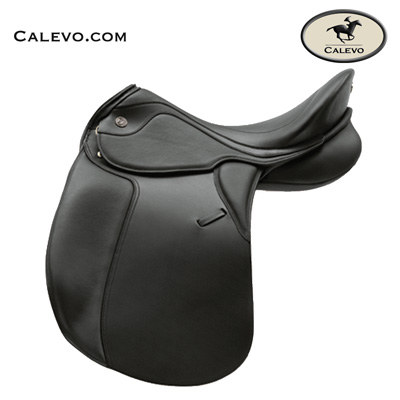 |
| Dressage saddle without stirrups |

Each brand of saddle is a little different and they start with different shapes. Some are very flat, some are very rounded or narrow. There are the brands sold in retails stores and there are the higher end custom saddle brands. Saddles can be purchased from retails
stores, saddle makers, saddle fitters and consignment shops. Buying a saddle from a consignment shop is a great way to go if you can find the proper fit for your horse. There's a place in New Hampshire called Pelham Saddlery. They have an amazing selection of used saddles and will come to you with saddles for a reasonable fee which is waved if you buy a saddle from them.
The saddles sold in retail stores - Collegiate, Pessoa, Stubben, Bates - while pricey, are less expensive than custom brands such as County, Black Country and about 100 more. A decent retail store saddle will cost between $1000 - $2000 and more. Custom saddles are about $5000 new. Used saddles are often not much less than new saddles, especially if they have been well maintained. It just depends on the saddle. A major difference, besides the custom fitting and leather quality, is the flocking or padding in the "panels" under the saddle where it rests against the horse's back. Flocking is usually wool (it can be synthetic) and looks like it just came off the sheep's back. It's reasonably adjustable. Many of the retail store brands use foam, memory foam or air bags to fill the panels. Some of the retail store brands can be converted from air bags to flocking to improve fit, comfort and adjustability.

The best thing to do when buying a saddle is to contact a saddle fitter. I bought all my saddles before doing this. It worked out fine but I may have made different choices if I had spoken to her first. My daughter's first saddle was an easy purchase. We bought a little saddle used from a friend when we leased her first pony. The price was right but the saddle was really too small for my daughter. When we bought her current pony, I had a woman from Dover Saddlery bring saddles to the barn to try on him. We decided to buy both jump and dressage saddles, primarily because there happened to be an extremely well priced dressage saddle on closeout that fit both Elizabeth and her pony. We also bought at Mattes Pad with shims to help correct the fit of the both saddles. Her jump saddle happens to be a Pessoa but that was just the one that fit the pony the best though we do need to use the correction pad to get the fit he needs.
When it was my turn to buy a saddle, I chose a Bates saddle after trying several other brands. The price was reasonable considering I don't own my own horse and I had read online that Bates saddles are easily converted from air pads to flocking. It's a really nice saddle and I love riding in it.
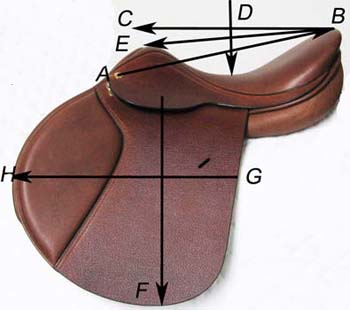
What do saddle sizes mean? There are two main sizes - the tree size/gullet size and the seat size. The tree which is the major structure of the saddle, can be made of wood, plastic, and other hard substances, fits the horse and can be narrow, wide, flat, round, curved. Every brand tends toward its own shape. The gullet plate is the piece that can be changed in adjustable saddles, usually starting with a medium which can be changed to be narrower or wider. As long as you buy a saddle that doesn't have an extreme tree shape, changing the gullet plate and amount of flocking can go a long way to getting a saddle to fit most horses. The seat size ranges from 15 for a tiny children's saddle to an 18 and up for large men. I'm 5'7" and ride in a 17" seat. My daughter is almost 5' tall and she rides in a 16.5" seat which has a little room for her to grow. The seat is measured by stretching a tape measure from the button to the center back of the seat (A to B in the diagram above). If you are looking at dressage saddles, the flap length may become a factor. The flap measurement is F in the diagram above.
About a month ago we met with a saddle fitter. This is different than the woman from Dover who came out to try saddles on our pony for us. The saddle fitter has taken an intensive course in England and she apprenticed to an American saddle fitting legend. Over time she has developed her own approach and I found it fascinating to watch her work. Her name is Diane Williams and if you are in the New England area she is wonderful. But wherever you are, there should be good saddle fitters available to you. This is a list of saddle fitters I found on the website of yet another custom saddle maker and Diane is on the list.
The saddle fitter will first palpate the horse's back and check for sensitivity and any issues the horse might be having. The she will put the saddle on your horse without anything under it. She can see if it's sitting to high or low. She will add or remove flocking, adjust the tree. I had her convert my Bates saddle from air to flocking and she got a great fit for the horse I ride. As it turned out, the inexpensive Circuit dressage saddle I bought my daughter was flocked with synthetic fiber fill. Diane pulled some out and replaced it with wool. Again, she was able to achieve an excellent fit. My daughter no longer needs to use the Mattes Pad with this saddle and has gone from hating riding in it to finding it extremely comfortable. Elizabeth's Pessoa jump saddle, while very comfortable, has a foam construction. There was nothing Diane could do for it so Elizabeth still needs to use the Mattes Pad to get a good fit on her pony which is fine, just a little annoying. We still like Elizabeth's jump saddle and considering she will outgrow this pony and the saddle in two years, we would not have considered anything custom made. I would, however, lean towards Bates saddles in the future. I really do love mine, the prices are good, the leather is high quality, the tree is adjustable and they can be converted to wool flocking giving you the best of everything.
Once you buy a saddle, remember you will need to buy stirrups, stirrup pads and stirrup leathers. Leathers come in a variety of lengths so if you are buying for a child, be sure to get short leathers. You can always punch more holes but it's nice if they fit right off the bat. Stirrups also come in sizes - widths. Just pay attention to what you are buying and ask for help. You will need a quilted saddle pad to go between the horse and the saddle to keep the saddle clean and to keep it from slipping around. And of course you will need a girth. We like fuzzy girths and prefer the Toklat girth for our jumping saddles. They are washable and comfortable for the horse. If you buy a dressage saddle, the girth will be 20 inches shorter than a jump girth, most likely black to match the saddle and the pad may need to be a bit bigger to accommodate the longer flaps. This is a good article on choosing the proper girth.
And now that you own a saddle, you need to take care of it! Saddles that are kept clean and conditioned will last a lifetime. In our house we clean saddles with glycerin soap, oil the billets, flaps and leathers and condition the seat with Lexol conditioner and oil. There are a ton of great products on the market. Some people prefer to clean with specially designed leather cleaners such as Effax Combi. Check out your local tack store and talk to a pony clubber to find out more about serious tack cleaning.
Congratulations on your huge purchase! Happy riding!
Kristie
Thursday, January 23, 2014
My daughter is obsessed with horses. What books might she like to read?
This post has the most hits of any post I've written in the years I've been blogging so I thought it called for an update. I once again enlisted the help of my voracious reader of horse books, my daughter.
My daughter devours horse books. We've got them all. So I thought I'd try to give you a list with a little something for every age. Most of the comments come directly from my 11 1/2 year old daughter (now 13 1/2 as I update this blog) since I haven't read most of these books. Many we originally found at the library. The Wellesely Library has a great horse book list. Others we stumbled upon through Amazon recommendations. At the end I've included my favorites for grown ups. Some of them you will love wether you are a horse person or not. These are just plain good books. And reading a good book about horses will help any non-horse obsessed parent relate to their horse obsessed child a little more. All titles are linked to Amazon. Several of the books are only available as eBooks.
Early Readers
Keeker by Hadley Higginson - Pre-reader to early reader. Fun bed time stories.
Pony Pals by Jeanne Betancourt - These were written awhile back. There are at least 20 books. Similar to Keeker, pre - early reader.
Horse Diaries - 10 books, each written by a different author. The books are not related to each other, each being about a different horse. My daughter's favorites are #2 Bell's Star and #10 Darcy.
Elementary School
Misty of Chincoteague by Marguerite Henry - Marguerite Henry wrote many wonderful horse novels starting with this one which won the Newbery Award and was originally published in 1947. My daughter enjoyed all the Misty books but didn't really like her other books. Elizabeth recommends Misty of Chincoteague, Stormy: Misty's Foal and Misty's Twilight.
Wildwood Stables by Suzanne Weyn - There are 6 books in this Scholastic series and was the first series Elizabeth really got into. She thinks these are good for 3rd grade and up even though the main character is a 13 year old girl. It takes place in a hunter lesson barn.
Riding Freedom by Pam Munoz Ryan - This book is about an orphan girl who lives in an orphanage with a barn. Elizabeth says it's a really good book.
Running Horse Ridge Series by Heather Brooks - There are 3 books in this series appropriate for 4th grade and up. The main character's mother died when she was a baby and she lives with her dad. She's a dressage rider.
Chestnut Hill Series by Lauren Brooke - There are 6 books in this series which, while appropriate for 4th grade and up, is about bratty girls. This was not one of Elizabeth's favorites.
Middle School (Elizabeth read many of these in 5th grade)
Heartland Series by Lauren Brooke - There are 20 books in this series which Elizabeth says are more sad and realistic. The main character ages from 12 through high school during the series. Her family owns a horse rehab center so it's about caring for the horses.
Thoroughbred Series by Joanna Campbell - 59 books in the original series and 15 books in the sequel Ashleigh series. These are nice books about a girl whose family raises race horses. Appropriate for 4th grade and up.
Canterwood Crest Series by Jessica Burkhart - This series has 20 books and has been Elizabeth's favorite for awhile. It's a little Dana Hall (local boarding school with equine program) meets eventing. There is some basic teen content - romance, social stuff - but appropriate for 5th - 8th grade.
Timber Ridge Riders Series by Maggie Dana - So far there are 8 books in this series. Elizabeth wrote an email to the author last summer and she wrote back! The stories are about two 15 year old girls who are eventers.
Horses of Oak Valley Ranch Series by Jane Smiley - These are excellent books. There are 5 of them so far starting with The Georges and the Jewels. Jane Smiley is a Pulitzer Prize winning novelist who has always owned horses. Her editor asked her to write a young adult horse series since they are in such high demand. If only all series were of this caliber.
Indefensible by Rebecca Frankeny - I read this one to make sure it was OK for E. The writing isn't the best but even I enjoyed the story. It's about best friend eventers and their horses. Good for 5th grade and up but the older the girl the more she'll really get the story.
Bittersweet Farm by Barbara Morgenroth - There are 6 books in this series for horse lovers. There is definitely some boy girl stuff in these books so better for late middle school. The girls live on a horse farm, they start off doing hunters and eq then one ends up doing dressage. Elizabeth is hooked on these books.
The Shadows Breathe and The Shadows Fall by Kathleen Marentes - These books focus on training show horses, primarily Saddlebreds and Arabians. There are story lines which include horse abuse and drugging and people who work to stop the abuse.
Turning on a Dime by Maggie Dana - By the same author as the Timber Ridge Rider series, the main character travels through time to the Civil War era. Another favorite of Elizabeth's.
Show Jumping Dreams by Claire Svendsen - This is a series of over 20 books. They're all good and flow one to the next. A girl loses her sister and mother and ends up living with her father and accumulates 4 horses. There are some mean girl dynamics, boys in the later books.
Young Adult
Shadow Horse and Whirlwind by Alison Hart - These are definitely young adult books, again, according to Elizabeth who read them at age 11. The main character is a teenaged girl who ends up with a foster family who runs a rehab center for animals.
A Circuit by Georgina Bloomberg - Young adult, 8th grade through high school. I bought one of these for Elizabeth and made the mistake of not pre reading it. There was a scene with a keg party and some heavy boy girl stuff. My sons discovered the problem and we pulled the book.
Dancing with Horses by Toni Mari - There are currently 3 books in this series about a college aged dressage rider trying to make it to the North American Junior Young Rider Championship.
Alex and Alexander by Natalie Keller Reinert - This is a 4 book series about life at the race track. Alex, the main character, is in her mid-twenties.
Ambition by Natalie Keller Reinert - This is the only book currently available in this series focused on eventing. It takes place in Florida and the main character has always dreamed of having her own farm. She is trying to make her way as an event trainer.
Nadia and Winny by Rachel Eliker - This two book series (Headed for the Win and Road to the Ragalia) is about an event rider moving through the upper levels who changes places with her horse (think Freaky Friday, equine addition).
Great Books for High School Kids through Adults (ranked by how much I enjoyed them)
Horse Heaven by Jane Smiley - This is my all time favorite book. I reread it every year. I don't know if I love it because I love horses or just because it is such a great book. She writes about the horses as though they were human characters and it is awesome. It's about horse racing but really, it's about horses and the people who live with them. So well written and I learned a ton about horse racing and training.
Eighty-Dollar Champion by Elizabeth Letts - This is one of those random books I bought having no idea what it might be about. I wanted to read it to make sure it was appropriate for E and I got totally hooked. It's your typical - and true - underdog story about an amazing horse saved from the slaughter truck who went on to win many times at Madison Square Garden. Again, maybe I loved it because I love horses but I think anyone who loves a good, well written story would embrace this one.
Seabiscuit: An American Legend by Laura Hillenbrand - I'm guessing you've read the book or seen the movie. The book, as usual, is WAY better than the movie. Another great underdog story. Super well written non-fiction tale of the triple crown winning race horse.
Horse People by Michael Korda - Another book I randomly picked up because it had a horse on the cover. I was so pleasantly surprised by this book written by the editor-in-chief of Simon & Schuster. He tells numerous stories about his interactions with horses and horse people. A rider himself, he has some good stories to tell - from fox hunting in the South to riding in Central Park in New York. I've read criticism of this book for being more about wealthy people and their lifestyle rather than about the connection between people and their horses but I enjoyed it anyway. I think it's a horse book non-horse people can enjoy.
Falling for Eli by Nancy Shullins - This was a lovely memoir about how a horse can come into a life and completely change it. Nancy Shullins tells her story with sensitivity and humor. I don't know if a non-horse person would get as much out of this book but it would probably be a valuable read for anyone with a horse person in their life. It might give you some perspective on the depth of the relationship between horse and rider.
And that's my list! Happy reading for you and your horse obsessed child!
Kristie
Subscribe to:
Posts (Atom)