I suppose there are many times we question our involvement with horses, especially during a New England winter! But my topic today centers on the pain of choosing the wrong horse. Too often a parent is willing to buy their child a horse but without the necessary support they can make an inappropriate choice. Once that happens it is very difficult to undo the damage. It is unfair to the kid and it is unfair to the horse.
The first pony we leased for my daughter was appropriate for the sport we leased her for but when we changed sports, the pony was no longer a safe choice. She dumped my daughter several times before our trainer wisely said enough. This is the point at which parents are tempted to make a huge mistake by not listening to our experts. Our experts want the best for us. In my case, the trainer had not one thing to gain by a horse change since she neither buys nor sells horses nor does she take a commission on any purchases. Fortunately, the pony we had was wanted for the job she knew and we were able to send her to a good home. Too often when the horse doesn't work out it is difficult to find them a new situation. It can take a very long time to rehome an unsafe horse and all that time you will be paying for board, shoes, vet costs and possibly training for a horse your child isn't riding or is riding in a limited way. The wrong horse will prevent your child from doing the things she wants to do. An uncooperative horse will make Pony Club or horse shows nearly impossible and if you do manage some schooling shows, your child will find it difficult to move up the levels or to go to rated shows and after awhile, you will resent the horse. You will also watch your child's confidence deteriorate and she very well may become so afraid she no longer wants to be involved with horses.
I've watched a few families suffer negative experiences. One family I know has a one year lease, two daughters who want to ride and very little knowledge about horses. Older, more experienced people can ride their horse but the girls who lease him really shouldn't. Even some trainers don't want to ride him because it isn't worth getting hurt. One of the girls came off the horse and broke her foot shortly after they got him. The family is stuck with the horse until the end of the lease and they are trying to do what they can, engaging a trainer to ride him. The biggest mistake I saw this family make was not having help right from the start. They waited months thinking they knew enough.
Let me tell you right now that if you have spent less than 6 days a week over at least 5 years with a horse you have no business owning one without professional help! They are complicated and there is an endless amount you need to know to handle the variety of situations that will arise. If you have a backyard horse for your kids you need Pony Club. Run, don't walk, to your nearest Pony Club and start learning what you need to know.
Another family has a daughter who is a bit more experienced and has had a very tough horse for a few years now. She handles him extremely well but hasn't been having any fun at all. Every ride is exhausting to watch. He always misbehaves, is very out of control and it is not a training issue. Her mother, who grew up with horses and Pony Club, has finally started looking for a different horse but even she is wondering what took her so long. They wasted several years on a horse that was never going to be a good partner for her daughter. I'm amazed the girl still wants to ride! They will not be able to sell the horse and plan to donate him to a collegiate riding program. Woe be the rider who draws that horse in competition!
Let's take a moment to think about the cost of the wrong choice. Board where we live is about $1000 a month, shoes range from $200 a month on up, the vet is about $1000 a year in a good year with no issues and then we have lessons and training costs which would be a minimum of $70 a week or $3600 a year. So a free horse costs you no less than $18,000 a year to support and honestly it costs more than that. So the thought of spending all that time and money for something that is not fun, stresses you out, endangers your child and has no easy out is ludicrous! But there is a solution!
I will start from the premise that it is always possible to find an appropriate horse for every kid. That does not mean that it will be quick or easy to find the right horse. And even wonderful horses have bad days. You will find many people who grew up with horses that threw them off, refused every fence, never came to them in the paddock and on and on. Some of those people would argue that they learned more from those naughty horses than they could have from the kind who take care of their rider. Well, I beg to differ. You don't necessarily learn more from either kind but you do learn different things. In most of those cases, someone, usually not the parents, gave those kids horses that were then kept in their backyard. Most of those parents didn't make conscious choices about the horse they had. It was a different time. And I would warn you about any "free" horse that crosses your path. As mentioned above, the upkeep for a horse is far more significant than the cost of an appropriate mount for a child assuming you aren't trying to be competitive on the A Circuit or in the Pony Division so if you are willing to support a horse, be willing to provide a small budget for the purchase.
I would argue that as equine parents our priority is to give our children the opportunity to experience life with horses and all the wonderful things that can come from that in the safest way possible. This is especially important if you are a parent with limited knowledge of horses, even more so if you have limited access to help. There are 2 primary qualities that stand out as determining the safety of any particular mount. The first is a good brain. You will hear this often with horses. It generally means the horse is intelligent, doesn't spook each and every day at the same exact bush it has lived next to for 5 years (I used to ride a horse that did this and it was annoying rather than unsafe but would have been very unsettling for a child). A horse with a good brain will try to figure out what you want him to do and will know when he has a kid on his back and how to behave. The second quality is experience. You can buy a young horse that will miraculously have such a good brain that it doesn't need experience to be a safe mount. However, it is best as a non-horsey parent to stick with slightly older, experienced horses. A horse that has already done everything you want to do with it will not be surprised. It will understand what's going on each day and can help your child along as she's learning. An older horse will need more maintenance but I promise it is well worth the trade off!
Before you choose a horse, know what it is you want to do with the horse (hunters, equitation, dressage, eventing) and look for a horse that has a record at that sport. If at some point this changes, be aware you might need to change horses as well. For instance, we leased my daughter's first pony to be used in the hunter ring in the short stirrup division. She was only ridden in smallish, enclosed rings. My daughter then switched to eventing. Suddenly the pony found herself in wide open spaces somewhat far away from the barn and with no other horses in sight. Asking her to change sports was actually unfair. She would have needed a great deal of training in order to succeed in a new sport and it just wasn't worth it so we sent her back to the short stirrup division where she has kept her rider very happy.
Once you identify the sport, identify the place you will board the horse and the horse professional who will help you with your horse. Have a discussion with any potential horse professionals and ask about their approach not only to finding the right horse but to caring for the horse once you have it. If you need help, is this person interested in helping you or does he or she primarily offer lessons and leave everything else to the owners or barn manager? Our trainer is a resident trainer at the barn where we board and she gives my daughter lessons, gives our horse training rides and provides a ton of invaluable support and advice. She is never too busy and is incredibly generous with her time and knowledge. In some cases your horse professional will lead you to an appropriate horse. I know one eventing trainer who specializes in half leasing schoolmaster ponies to kids for the introductory levels. At a certain point they need to acquire their own horse but this is a great way to get started. Our trainer does not act as an agent in horse sales but she does assist her clients by helping them identify the characteristics they are looking for in a horse, looking over ads brought to her by clients and going out to look at horses the client has identified as potential options. This process is extremely educational. Even though it can take a great deal of time to search for horses and visit them only to be disappointed by what you find, each horse you look at teaches you something about what you are looking for and which qualities are the must have qualities.
There are many places to look for the right horse. There are great websites out there with horse listings and people at your barn will often know of good horses for sale. Pony Club is a great resource for finding horses for kids. Any ad that mentions a horse has been used for Pony Club rallies and/or ratings, especially if they have done rallies in multiple disciplines and ratings above the D2 level (which means D3, C1, C2, etc.) that tells you this is a kids' mount. There are classified ads on the Pony Club website and many local clubs or regions keep their own classified ad pages. From there it really depends on what you plan to do with the horse. USEA (US Eventing Association) has websites by Area with great classifieds. Sport Horse Nation is another classified site dedicated primarily to eventing horses. I am sure there is an equivalent in the hunter, equitation, jumper and dressage disciplines and a good web search should help you find them. In addition equine.com, dreamhorse.com and others have a huge assortment of classified ads. You can narrow it down by price, location, age, etc.
The next thing you need to determine is what does the right horse look like. Color, breed, even gender and size are all things you need to be willing to let go of in your search. It's ok to have a preference but if you want a bay gelding and the perfect grey mare appears, you buy the perfect grey mare. High on my list of qualities are good ground manners, willingness to get on and off the trailer and willingness to stand for me when I pull his mane or clip him. These are the things that will make my job as chauffeur and groom easy and since I'm paying the bills, these are by and large non-negotiable. I can say that because my daughter is riding at a low enough level that we don't need some kind of insane speed or jumping ability. In fact, those would be negatives at this point. For a first horse you want one you have to really kick to make it go rather than one you are always pulling on to slow it down. As I mentioned earlier, experience is essential. If you plan to ride in the open, buy or lease a horse that has evented or done hunter paces. If you plan to do dressage, buy a horse that knows how to be ridden with contact so that your child can learn from the horse. Ask parents of kids doing the sport your child wants to do what they most value in their child's horse. Work with your professional to hone the list and prioritize it. You should have a few non-negotiable qualities, several desirable qualities and a few preferences you can live without but can be kept in mind during the search.
I'd like to say something her about gender. Some people will only buy geldings and others will only buy mares. We've had both and here's what little I can decipher about the difference. The boys may have an opinion but they are pretty willing to give it up if you insist. The girls on the other hand tend to hang onto their opinions. They are more willing to stick to their guns and have an argument with you about who's way is the correct way. Our trainer is a big fan of geldings and my daughter's amazing pony was a gelding. When I found our lovely mare our trainer was determined not to like her. She tried everything to make the horse angry or to find an issue. But our mare is just lovely. She has the world's best attitude and tries her heart out every day. She is definitely bossy and opinionated but she's so wonderful we can live with that. She is also quite amorous of all the boys when she is in season which seems like pretty much most of the time so we live with that too. So gender can be one of your non-negotiables but I hate to think we would have passed on Quizz because she's a girl. It would have definitely been our loss.
Before you head out to try any horses, set a budget. Depending on what you want to do, a first horse should cost between $5,000 and $10,000. Backyard ponies can be cheaper, show ponies (meaning hunter division) will be far more expensive. We paid in that range for our pony and quite a bit more for my daughter's current horse. This may vary depending on where you live. Remember a more flexible budget will give you more options but you really do not need to pay a whole lot more to get a first horse. And don't expect to buy one horse and be done. Again, it all depends on what you intend to do with the horse. In our case my daughter needed one year with an experienced pony we knew she would outgrow. We bought a pony, lost a little selling it (as we knew we would), and bought her wonderful next horse. This horse should last her awhile if she can stay sound. It's a little bit like buying a house. You start with something small and then after having 3 kids you outgrow the tiny house and move somewhere a little bigger. If you try to buy one horse that will be all things from beginning to end you will have to make concessions somewhere else. Either you will pay more for talent you won't be using until some undefined time in the future by which time your child may not even be riding or the horse may not still be sound or you will buy too much horse - too big, too strong or fast - wanting to make it last only to defeat the whole purpose of trying to buy the appropriate mount. Don't do it! If you are really concerned about buying and selling on a rather short horizon, find a horse you can lease.
Regarding the search for the horse I just want to mention something about looking at ads and videos. Look at horses aged 8 - 16. The older horses should cost less and you should plan for needing to retire that horse or free lease it out to kids when you are done until he can't work. Many horses can keep teaching kids well into their 20's. When you look at videos, make sure you are looking at a child riding the horse in a situation comparable to what your child will be doing. I often found the videos were of professionals riding the horse. I would ask to see a video of a kid jumping the horse in a field. If the video is less than 10 seconds long, they might be hiding something. They might not but it's something to keep in mind. I'd rather see a horse jumping clumsily but safely with a kid on its back than beautifully 3 levels above where my child is competing. Even better is seeing both!
After you identify some horses you are interested in, call the owners or agents to chat and set up a time you can take your child and trainer to ride the horse. If the horse is nearby, try to visit on more than one day. This is a huge long term commitment, take your time and gather all the information. When we look at horses, usually the current trainer or rider will get on and warm the horse up, show off his jumping or lead changes, etc. Then both my daughter and our trainer take turns. If we go a longer distance and our trainer can't join us, I might hop on just to see if I feel like the horse is scary or not. I'm not much of a rider but I can at least gather one more data point. I would never buy a horse my trainer hasn't sat on but I might have to do the first visit without her. I always let the people showing us the horse know ahead of time that I need to see my daughter jump the horse in an open field. Often this has to be done on a different day since not everyone has a cross country field available on their property. However, I wouldn't ever buy a horse without having seen my daughter jump it in the open. Jumping in the open is a big part of what she does with her horse and it's the activity that leaves the most opportunity for something to go wrong. After the ride I like to go into the barn and be part of the untacking experience, especially if they already had the horse tacked when we got there. It's important to see how the horse behaves in the barn, on the cross ties, etc. Sometimes you will gain little snip-its of pertinent information such as the horse can't be cross tied! It may be a manageable quirk rather than a deal breaker but such a thing would surely warrant consideration and further investigation.
I'm not going to get into vetting and all the other things involved with buying a horse. Everyone has their own perspective and I'm really just focusing on how to make sure you're making a safe choice for your child. If you do make the right choice, your child will have fun and thrive while learning from a lovely animal. She will likely improve her skills quickly and be able to move up the levels and gain confidence. If you don't make the right choice, be patient but not too patient. It takes a year to get to know a horse. There are so many factors - change of environment, different riding style, new schedule, new farrier. Give the horse a chance. If you did your homework then you chose this horse because you believed it was the best choice. Give it some time. On the other hand, listen to your gut, your child and your horse professional. If the horse demonstrates dangerous behavior, take it seriously. Don't be afraid to say we made a mistake and to take steps to relocate the horse and start over again. Don't waste 3 years with the wrong horse making a bad situation worse. It's ok to acknowledge when it isn't working and to find a way to move onto a better fit but be responsible to the horse in the process. In reality our kids are home with us and riding for a very limited number of years. Try not to waste them!
Showing posts with label choosing a barn. Show all posts
Showing posts with label choosing a barn. Show all posts
Thursday, February 12, 2015

Tuesday, February 3, 2015
What About Me?: When mom wants a turn to ride.
 |
| Elizabeth on Sabrina with me on Toby. |
I know quite a few moms who have been riding all their lives. Their daughters discovered horses through their mothers and it was only a matter of time before they were both riding. Many of these women now keep their horses at home. Horses have always been a priority for them so when they realized there was a need to support more than one horse, they built barns. Oh how I wish 15 years ago when we left the city I had opted for land and bucolic bliss over suburban convenience. I'm now stuck in the town we live in until my kids graduate from high school so putting horses in my back yard is not an option.
If having horses in your backyard is an option, it's a great way to make riding more accessible for multiple family members. With horses at home you save money on board and have the convenience of being able to ride whenever you want (unless it's winter 6 months of the year and you live in New England with no indoor). Just having Elizabeth's horse at home would mean she could ride while I cook dinner! But beware! Having horses at home is a huge commitment. I won't go into all the gory details but just a few of the things I've discovered one needs to consider when keeping horses at home are enough to put most people off. Among them are manure management, insurance, never ever being able to go away or paying an extra $1000 for barn help to be away for the weekend, being the one to wake up to feed the horses 365 days a year and the one to do night check the same number of days no matter the weather, state of your health or other things going on in your life. Perhaps at this point it is just as well that I can't have horses at home since I'm pretty sure I'd be in over my head!
 |
| Elizabeth on Pumba with me on Nugget. |
When we bought Elizabeth's horse last fall my husband assumed we would share the horse. I know a couple of other moms who are looking for horses to share with their kids. And my two cents on this topic is that is doesn't work, at least not for us. It certainly can work depending on your goals. For our family, we have chosen to support Elizabeth's riding goals. Those goals are pretty lofty and require her to ride often. Our horse works 6 times a week. We try to have our trainer ride her once a week which leaves 5 rides for Elizabeth and me to split up. Well, if I'm lucky, I can have one. And that is definitely the way it should be. Quizz is Elizabeth's horse. This is Elizabeth's sport. They need to work hard in order to be ready for Pony Club certifications and horse trials.
 |
| My favorite view - of my daughter on her pony through the ears of an awesome horse! |
since my daughter's horse has had so many issues - expensive issues - I don't think he will ever be willing to own two horses. The most I can hope for is that another horse will come along with an owner willing to lease him or her out a couple of days a week. Some day, when Elizabeth needs an upper level horse and Quizz has finished doing her job with Elizabeth, I will have my turn. Quizz and I will live out our twilight years on the trail together. Until then I will get my horse fix living through my daughter - watching, trailering, grooming and paying.
Wednesday, February 5, 2014
I hate to sound silly, but what does my pony eat?

The most important component to a horse's diet is forage or roughage - grass or hay. Some horses in some climates live outside in grassy pastures all the time and graze. That is often their only form of sustenance. Lucky horses!
Because we have developed an artificial lifestyle for our horse athletes, we usually need to supplement their forage with concentrates - usually grain.
Succulents are the fun, "healthy" treats we like to give horses such as apples, carrots and fresh grass. They are a treat and should be given to reward good behavior and not given in excess.
And lastly, just like humans, our modern, artificially kept horses often take supplements - think of them as vitamins. Technically, supplements fall under concentrates but I order them separately and for beginners like us, they are easier to comprehend on their own.
So those are the basics. Now for the nitty gritty.
Horses have enormously long intestines and food takes about 3 days to make it's way through their bodies. It is important that they eat very little, very frequently. Horses need more food than ponies. Concentrates can be high in sugar and make ponies very excited - just like a child gets hyped up on cupcakes and ice cream at a birthday party.
According to my pony club daughter, roughage feed includes hay (varieties include timothy, clover, bermuda, alfalfa), grass, hay pellets, range cubes and sugar beet pulp. Hay pellets, range cubes and sugar beet pulp must be soaked before feeding. They expand in water so if you feed them dry, they will expand in the horse's stomach and can cause their stomach to explode. Which leads me to inform you of the fact that horses cannot vomit. Therefore, what goes in stays in unless removed surgically.
Horses eat hay all day and all night. They need this to keep their digestion moving. How much they eat depends on size. Hay is given at our barn first thing in the morning (6am?), they are then turned out with hay after their grain (if they get grain), given hay again around noon, 2:00, 5:00 and 9:00pm.
Horses have very sensitive systems. When there is a change in hay, they can react badly. Therefore, when any change is made, it should be made slowly. When we go away for a couple of days we travel with our own hay. If we are away for a week we may bring 2 bales and mix it with the new hay for a few days before changing over completely. Then we have to do the same thing in reverse upon our return home.
Concentrates are the means we use to control our horses weight and nutrition. Depending on your hay, your horse may not be getting all the nutrients he needs. There are a million different products out there to combat this problem. Many brands have comparable grain products and most barn managers know a reasonable amount about the grains they feed. Grain is usually fed twice a day, morning and late afternoon at our barn. Our pony didn't get any grain or supplements prior to living with us but we now feed him a tiny amount of MVP in the morning. MVP is a pellet form vitamin. It gives him some nutrition and something fun to eat in the morning. It also gives us something to mix with his supplements which come in powder form. We give him supplements for his digestion because he's kind of gassy. There are so many products and it is all incredibly confusing. Find someone who really knows what they are doing to help you figure out what your pony needs. He likely doesn't need anything!
On the topic of supplements, for people like us who have one pony and embrace convenience,
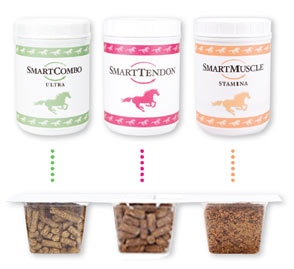 SmartPaks are a great thing. You can choose whatever supplements you feel your horse needs, determine the quantity (they are very helpful with this, professional vitamin salespeople) and whether you want them in the am or pm feed. The company then packages the supplements and ships them, usually free of charge, to your barn so whoever is doing the feeding at your barn just opens a pack each morning or evening and adds it in. If you instead choose to buy supplements in bulk you can make up your own packs using ziploc baggies. This is what we did with our first two ponies. It takes quite a bit of time and was tedious. SmarPaks are just easier for us. That said, not every supplement is available. Again, this is whatever works for you and your horse!
Another extremely important component of your equine diet is salt and water. Your horse should always have a salt lick in his stall. Take note of whether or not your horse is consuming the salt. And horses always need an ample supply of fresh water. This is something your barn should be providing throughout the day, especially in winter when the water buckets freeze over and need to be broken open with a hammer every few hours.
I'm sure you've heard the terms colic and founder but may not really know what they mean. Colic refers to a twisting of the intestines. With so much intestine floating around in their big horse bodies, horses are prone to this issue. How you feed them can contribute to or reduce the risk of colic. Horses should not eat concentrates just prior to or just after hard work. A little hay is OK but if you plan to ride around grain feeding time, ask the barn to hold the grain until after you ride. You should not ride for at least 30 minutes after grain is fed and should not give it to your horse after work until they are fully cooled down and have first consumed a little hay to get their digestive system going again. If the weather is good and you have time to graze your horse after riding, make sure that he is fully cooled down first. And be careful about how much grass you let him eat. Especially in the spring time the sugar content of the grass can be very high and too much sugar can cause him to founder.

What is founder? It is a condition of the hoof in which the coffin bone pulls away from the hoof. I don't fully understand it but this is a pretty good article if you would like to learn more. The thing you need to know is that too much sugar can seriously damage a horse's delicate system. It seems strange that sugar can cause huge issues in the hooves but that is exactly what happens. Horses' hooves are complicated and connected to their nervous systems. Unfortunately, once a horse has these hoof issues caused by founder, or laminitis, a different but equally horrifying hoof issue, there is little that can be done for them.
We have cared for three ponies. All three had significantly different diets and all three stayed nutritionally healthy. All three taught me something about feed. Our second pony had to have her hay soaked to remove dust - she had allergies. She also had monthly allergy shots. And she loved to eat. She is a prime example of ponies who just love to eat eat eat and it is up to us to help control that tendency. Our first pony on the other hand tended to be rather slim, unusual for a pony. Our current pony is super easy. I think he's pretty psyched to have morning grain. We don't give him afternoon grain and unlike the horses who know it's feeding time and start making noise around 3:00pm, he is happy to eat a little hay and do some work in exchange for a yummy treat. We've given different supplements to each pony as well. I'm not sure if any of them do anything but it makes me feel like a good caregiver. There are supplements out there for marsh behavior, for old age, to make their coat shiny and for anything else you can think of. They can be very expensive and some probably are worth giving.
As with everything, make sure you have someone who can help you with knowing what to feed your pony and when. That's the most important thing. If you can, spend a day helping out with feeding at your barn and learn from the people who work there. With 40 some horses at our barn it's fascinating to see all the different feed. Some people bring in their own hay because they like feeding alfalfa or timothy. Some horses have serious issues and need really special feed regiments. Some guys like ours just eat what they're given and seem to thrive on anything. Once again, horses are a lot like people.
If you care to read further on the topic, the pony club manuals have great information. The D Level Manual is a little shorter and more simplistic and starts on page 199. The C Level Manual is longer and goes into great detail starting on page 167. I highly recommend reading these books if you can find the time.
Happy eating!
Kristie
Thursday, January 23, 2014
My daughter is obsessed with horses. What books might she like to read?
This post has the most hits of any post I've written in the years I've been blogging so I thought it called for an update. I once again enlisted the help of my voracious reader of horse books, my daughter.
My daughter devours horse books. We've got them all. So I thought I'd try to give you a list with a little something for every age. Most of the comments come directly from my 11 1/2 year old daughter (now 13 1/2 as I update this blog) since I haven't read most of these books. Many we originally found at the library. The Wellesely Library has a great horse book list. Others we stumbled upon through Amazon recommendations. At the end I've included my favorites for grown ups. Some of them you will love wether you are a horse person or not. These are just plain good books. And reading a good book about horses will help any non-horse obsessed parent relate to their horse obsessed child a little more. All titles are linked to Amazon. Several of the books are only available as eBooks.
Early Readers
Keeker by Hadley Higginson - Pre-reader to early reader. Fun bed time stories.
Pony Pals by Jeanne Betancourt - These were written awhile back. There are at least 20 books. Similar to Keeker, pre - early reader.
Horse Diaries - 10 books, each written by a different author. The books are not related to each other, each being about a different horse. My daughter's favorites are #2 Bell's Star and #10 Darcy.
Elementary School
Misty of Chincoteague by Marguerite Henry - Marguerite Henry wrote many wonderful horse novels starting with this one which won the Newbery Award and was originally published in 1947. My daughter enjoyed all the Misty books but didn't really like her other books. Elizabeth recommends Misty of Chincoteague, Stormy: Misty's Foal and Misty's Twilight.
Wildwood Stables by Suzanne Weyn - There are 6 books in this Scholastic series and was the first series Elizabeth really got into. She thinks these are good for 3rd grade and up even though the main character is a 13 year old girl. It takes place in a hunter lesson barn.
Riding Freedom by Pam Munoz Ryan - This book is about an orphan girl who lives in an orphanage with a barn. Elizabeth says it's a really good book.
Running Horse Ridge Series by Heather Brooks - There are 3 books in this series appropriate for 4th grade and up. The main character's mother died when she was a baby and she lives with her dad. She's a dressage rider.
Chestnut Hill Series by Lauren Brooke - There are 6 books in this series which, while appropriate for 4th grade and up, is about bratty girls. This was not one of Elizabeth's favorites.
Middle School (Elizabeth read many of these in 5th grade)
Heartland Series by Lauren Brooke - There are 20 books in this series which Elizabeth says are more sad and realistic. The main character ages from 12 through high school during the series. Her family owns a horse rehab center so it's about caring for the horses.
Thoroughbred Series by Joanna Campbell - 59 books in the original series and 15 books in the sequel Ashleigh series. These are nice books about a girl whose family raises race horses. Appropriate for 4th grade and up.
Canterwood Crest Series by Jessica Burkhart - This series has 20 books and has been Elizabeth's favorite for awhile. It's a little Dana Hall (local boarding school with equine program) meets eventing. There is some basic teen content - romance, social stuff - but appropriate for 5th - 8th grade.
Timber Ridge Riders Series by Maggie Dana - So far there are 8 books in this series. Elizabeth wrote an email to the author last summer and she wrote back! The stories are about two 15 year old girls who are eventers.
Horses of Oak Valley Ranch Series by Jane Smiley - These are excellent books. There are 5 of them so far starting with The Georges and the Jewels. Jane Smiley is a Pulitzer Prize winning novelist who has always owned horses. Her editor asked her to write a young adult horse series since they are in such high demand. If only all series were of this caliber.
Indefensible by Rebecca Frankeny - I read this one to make sure it was OK for E. The writing isn't the best but even I enjoyed the story. It's about best friend eventers and their horses. Good for 5th grade and up but the older the girl the more she'll really get the story.
Bittersweet Farm by Barbara Morgenroth - There are 6 books in this series for horse lovers. There is definitely some boy girl stuff in these books so better for late middle school. The girls live on a horse farm, they start off doing hunters and eq then one ends up doing dressage. Elizabeth is hooked on these books.
The Shadows Breathe and The Shadows Fall by Kathleen Marentes - These books focus on training show horses, primarily Saddlebreds and Arabians. There are story lines which include horse abuse and drugging and people who work to stop the abuse.
Turning on a Dime by Maggie Dana - By the same author as the Timber Ridge Rider series, the main character travels through time to the Civil War era. Another favorite of Elizabeth's.
Show Jumping Dreams by Claire Svendsen - This is a series of over 20 books. They're all good and flow one to the next. A girl loses her sister and mother and ends up living with her father and accumulates 4 horses. There are some mean girl dynamics, boys in the later books.
Young Adult
Shadow Horse and Whirlwind by Alison Hart - These are definitely young adult books, again, according to Elizabeth who read them at age 11. The main character is a teenaged girl who ends up with a foster family who runs a rehab center for animals.
A Circuit by Georgina Bloomberg - Young adult, 8th grade through high school. I bought one of these for Elizabeth and made the mistake of not pre reading it. There was a scene with a keg party and some heavy boy girl stuff. My sons discovered the problem and we pulled the book.
Dancing with Horses by Toni Mari - There are currently 3 books in this series about a college aged dressage rider trying to make it to the North American Junior Young Rider Championship.
Alex and Alexander by Natalie Keller Reinert - This is a 4 book series about life at the race track. Alex, the main character, is in her mid-twenties.
Ambition by Natalie Keller Reinert - This is the only book currently available in this series focused on eventing. It takes place in Florida and the main character has always dreamed of having her own farm. She is trying to make her way as an event trainer.
Nadia and Winny by Rachel Eliker - This two book series (Headed for the Win and Road to the Ragalia) is about an event rider moving through the upper levels who changes places with her horse (think Freaky Friday, equine addition).
Great Books for High School Kids through Adults (ranked by how much I enjoyed them)
Horse Heaven by Jane Smiley - This is my all time favorite book. I reread it every year. I don't know if I love it because I love horses or just because it is such a great book. She writes about the horses as though they were human characters and it is awesome. It's about horse racing but really, it's about horses and the people who live with them. So well written and I learned a ton about horse racing and training.
Eighty-Dollar Champion by Elizabeth Letts - This is one of those random books I bought having no idea what it might be about. I wanted to read it to make sure it was appropriate for E and I got totally hooked. It's your typical - and true - underdog story about an amazing horse saved from the slaughter truck who went on to win many times at Madison Square Garden. Again, maybe I loved it because I love horses but I think anyone who loves a good, well written story would embrace this one.
Seabiscuit: An American Legend by Laura Hillenbrand - I'm guessing you've read the book or seen the movie. The book, as usual, is WAY better than the movie. Another great underdog story. Super well written non-fiction tale of the triple crown winning race horse.
Horse People by Michael Korda - Another book I randomly picked up because it had a horse on the cover. I was so pleasantly surprised by this book written by the editor-in-chief of Simon & Schuster. He tells numerous stories about his interactions with horses and horse people. A rider himself, he has some good stories to tell - from fox hunting in the South to riding in Central Park in New York. I've read criticism of this book for being more about wealthy people and their lifestyle rather than about the connection between people and their horses but I enjoyed it anyway. I think it's a horse book non-horse people can enjoy.
Falling for Eli by Nancy Shullins - This was a lovely memoir about how a horse can come into a life and completely change it. Nancy Shullins tells her story with sensitivity and humor. I don't know if a non-horse person would get as much out of this book but it would probably be a valuable read for anyone with a horse person in their life. It might give you some perspective on the depth of the relationship between horse and rider.
And that's my list! Happy reading for you and your horse obsessed child!
Kristie
My daughter devours horse books. We've got them all. So I thought I'd try to give you a list with a little something for every age. Most of the comments come directly from my 11 1/2 year old daughter (now 13 1/2 as I update this blog) since I haven't read most of these books. Many we originally found at the library. The Wellesely Library has a great horse book list. Others we stumbled upon through Amazon recommendations. At the end I've included my favorites for grown ups. Some of them you will love wether you are a horse person or not. These are just plain good books. And reading a good book about horses will help any non-horse obsessed parent relate to their horse obsessed child a little more. All titles are linked to Amazon. Several of the books are only available as eBooks.
Early Readers
Keeker by Hadley Higginson - Pre-reader to early reader. Fun bed time stories.
Pony Pals by Jeanne Betancourt - These were written awhile back. There are at least 20 books. Similar to Keeker, pre - early reader.
Horse Diaries - 10 books, each written by a different author. The books are not related to each other, each being about a different horse. My daughter's favorites are #2 Bell's Star and #10 Darcy.
Elementary School
Misty of Chincoteague by Marguerite Henry - Marguerite Henry wrote many wonderful horse novels starting with this one which won the Newbery Award and was originally published in 1947. My daughter enjoyed all the Misty books but didn't really like her other books. Elizabeth recommends Misty of Chincoteague, Stormy: Misty's Foal and Misty's Twilight.
Wildwood Stables by Suzanne Weyn - There are 6 books in this Scholastic series and was the first series Elizabeth really got into. She thinks these are good for 3rd grade and up even though the main character is a 13 year old girl. It takes place in a hunter lesson barn.
Riding Freedom by Pam Munoz Ryan - This book is about an orphan girl who lives in an orphanage with a barn. Elizabeth says it's a really good book.
Running Horse Ridge Series by Heather Brooks - There are 3 books in this series appropriate for 4th grade and up. The main character's mother died when she was a baby and she lives with her dad. She's a dressage rider.
Chestnut Hill Series by Lauren Brooke - There are 6 books in this series which, while appropriate for 4th grade and up, is about bratty girls. This was not one of Elizabeth's favorites.
Middle School (Elizabeth read many of these in 5th grade)
Heartland Series by Lauren Brooke - There are 20 books in this series which Elizabeth says are more sad and realistic. The main character ages from 12 through high school during the series. Her family owns a horse rehab center so it's about caring for the horses.
Thoroughbred Series by Joanna Campbell - 59 books in the original series and 15 books in the sequel Ashleigh series. These are nice books about a girl whose family raises race horses. Appropriate for 4th grade and up.
Canterwood Crest Series by Jessica Burkhart - This series has 20 books and has been Elizabeth's favorite for awhile. It's a little Dana Hall (local boarding school with equine program) meets eventing. There is some basic teen content - romance, social stuff - but appropriate for 5th - 8th grade.
Timber Ridge Riders Series by Maggie Dana - So far there are 8 books in this series. Elizabeth wrote an email to the author last summer and she wrote back! The stories are about two 15 year old girls who are eventers.
Horses of Oak Valley Ranch Series by Jane Smiley - These are excellent books. There are 5 of them so far starting with The Georges and the Jewels. Jane Smiley is a Pulitzer Prize winning novelist who has always owned horses. Her editor asked her to write a young adult horse series since they are in such high demand. If only all series were of this caliber.
Indefensible by Rebecca Frankeny - I read this one to make sure it was OK for E. The writing isn't the best but even I enjoyed the story. It's about best friend eventers and their horses. Good for 5th grade and up but the older the girl the more she'll really get the story.
Bittersweet Farm by Barbara Morgenroth - There are 6 books in this series for horse lovers. There is definitely some boy girl stuff in these books so better for late middle school. The girls live on a horse farm, they start off doing hunters and eq then one ends up doing dressage. Elizabeth is hooked on these books.
The Shadows Breathe and The Shadows Fall by Kathleen Marentes - These books focus on training show horses, primarily Saddlebreds and Arabians. There are story lines which include horse abuse and drugging and people who work to stop the abuse.
Turning on a Dime by Maggie Dana - By the same author as the Timber Ridge Rider series, the main character travels through time to the Civil War era. Another favorite of Elizabeth's.
Show Jumping Dreams by Claire Svendsen - This is a series of over 20 books. They're all good and flow one to the next. A girl loses her sister and mother and ends up living with her father and accumulates 4 horses. There are some mean girl dynamics, boys in the later books.
Young Adult
Shadow Horse and Whirlwind by Alison Hart - These are definitely young adult books, again, according to Elizabeth who read them at age 11. The main character is a teenaged girl who ends up with a foster family who runs a rehab center for animals.
A Circuit by Georgina Bloomberg - Young adult, 8th grade through high school. I bought one of these for Elizabeth and made the mistake of not pre reading it. There was a scene with a keg party and some heavy boy girl stuff. My sons discovered the problem and we pulled the book.
Dancing with Horses by Toni Mari - There are currently 3 books in this series about a college aged dressage rider trying to make it to the North American Junior Young Rider Championship.
Alex and Alexander by Natalie Keller Reinert - This is a 4 book series about life at the race track. Alex, the main character, is in her mid-twenties.
Ambition by Natalie Keller Reinert - This is the only book currently available in this series focused on eventing. It takes place in Florida and the main character has always dreamed of having her own farm. She is trying to make her way as an event trainer.
Nadia and Winny by Rachel Eliker - This two book series (Headed for the Win and Road to the Ragalia) is about an event rider moving through the upper levels who changes places with her horse (think Freaky Friday, equine addition).
Great Books for High School Kids through Adults (ranked by how much I enjoyed them)
Horse Heaven by Jane Smiley - This is my all time favorite book. I reread it every year. I don't know if I love it because I love horses or just because it is such a great book. She writes about the horses as though they were human characters and it is awesome. It's about horse racing but really, it's about horses and the people who live with them. So well written and I learned a ton about horse racing and training.
Eighty-Dollar Champion by Elizabeth Letts - This is one of those random books I bought having no idea what it might be about. I wanted to read it to make sure it was appropriate for E and I got totally hooked. It's your typical - and true - underdog story about an amazing horse saved from the slaughter truck who went on to win many times at Madison Square Garden. Again, maybe I loved it because I love horses but I think anyone who loves a good, well written story would embrace this one.
Seabiscuit: An American Legend by Laura Hillenbrand - I'm guessing you've read the book or seen the movie. The book, as usual, is WAY better than the movie. Another great underdog story. Super well written non-fiction tale of the triple crown winning race horse.
Horse People by Michael Korda - Another book I randomly picked up because it had a horse on the cover. I was so pleasantly surprised by this book written by the editor-in-chief of Simon & Schuster. He tells numerous stories about his interactions with horses and horse people. A rider himself, he has some good stories to tell - from fox hunting in the South to riding in Central Park in New York. I've read criticism of this book for being more about wealthy people and their lifestyle rather than about the connection between people and their horses but I enjoyed it anyway. I think it's a horse book non-horse people can enjoy.
Falling for Eli by Nancy Shullins - This was a lovely memoir about how a horse can come into a life and completely change it. Nancy Shullins tells her story with sensitivity and humor. I don't know if a non-horse person would get as much out of this book but it would probably be a valuable read for anyone with a horse person in their life. It might give you some perspective on the depth of the relationship between horse and rider.
And that's my list! Happy reading for you and your horse obsessed child!
Kristie
Tuesday, January 14, 2014
Pony Club: What is it? Should we join?
I first heard of Pony Club
when I took my daughter to a great dressage barn up in Maine for lessons a few
summers ago. The barn owner made an
obscure reference to having jumped 4 feet without stirrups and all that other
crazy pony club stuff but she was done jumping.
I was mystified and wondered what she meant.
When we decided to change
barns, we soon found ourselves out of our depth. Our first barn, like most hunter/jumper
barns, took care of everything for us. I
had no idea what the pony ate or when, or any idea what to do about veterinary
and dental care. They arranged all of it
and I wrote a check. On show days the
instructors loaded the ponies into their trailer and drove them to the
show. It was great! Then again, I like knowing all that stuff and
doing it for myself. When we switched to
eventing, our new trainer (a past pony clubber herself) was willing to show us what to do and stand next to us as we learned but
she wasn’t going to do it for us. This
was just what we wanted but it was also a little intimidating. We needed more support, more education. Enter Pony Club.
I often describe Pony Club to
non-horse friends as Girl Scouts but you bring your pony. The United States Pony Club is divided into regions which each contain a number of clubs. Clubs can take 2 forms. A Center is one in which a barn, and often
one particular instructor, runs a pony club at their facility for the kids who
ride there. The advantage to this model
is that kids who may not have access to their own mount can participate
easily. The downside can be that the
education is less broad, coming primarily from the instructor they ride with
each week. In contrast, ours is a
traditional Pony Club, meaning that it has no single location. Many of our members keep their ponies at home
(any equine animal being used by a pony clubber is known as a pony, regardless
of size) and most of the mothers ride as well.
We have several barns in the area that host us and one that hosts our
annual August camp. The advantage to
this type of club is exposure to many instructors from multiple disciplines and
the presence of experienced horsepeople in the ranks of our sponsors (what they
call the parents of pony clubbers). I
suppose the downside to this model is that it’s difficult to participate fully
without your own pony or your own trailer but I’ve been really impressed with
the horse community in our area and how much they have done to keep kids in the
program.
Pony Club provides an
enriching program of education in both horse management and riding. Over time, members achieve “Ratings” based on
their proficiency in these two areas.
Pony Club originally emerged from the eventing discipline so the
traditional path is heavily influenced by the skills and riding style of the
eventer but there are now other paths one can take through pony club at the
higher levels. Ratings are conducted
once or twice a year depending on the number of participants and the levels
they are testing for. You can think of
it like a karate test for a higher belt.
The candidates are being tested against a standard. All can pass or all can fail or there can be a mix. Sometimes candidates pass one
portion such as horse management but not another, such as the riding portion.
The ratings are as follows:
Unrated – What we call a pony
clubber prior to their first ratings test.
D1, D2, D3 – D1 is the first
rating attained and is pretty basic. By
the time a rider reaches the D3 they are jumping 2’3” both in an enclosed space
and in an open field as well as having a pretty hefty knowledge of tack, horse
anatomy, veterinary care, etc. The D3 level is the first to require a record book which includes a good deal of information about your pony - farrier and vet visits, training, costs of everything. My daughter is a D2, hoping to do her D3 next fall.
C1, C2, C3 – This is pretty
serious stuff. I observed a C1/C2 rating conducted by a national examiner and
was seriously impressed with the young women who tested (and all passed). The C2 is jumping over 3’. The C3 gets particularly serious with
candidates switching horses for part of the riding portion. The young women in our club who are C2’s are
juniors and seniors in high school. Ratings C3 and above are conducted on the national
level.
HB – This rating means you
have achieved a B rating in horse management but have not yet rated a B in
riding. Some candidates prefer to do
their HB first and their C3 after.
B – The “traditional” B
rating is both horse management and riding and includes all possible riding
options. There are paths that allow a
person to focus on dressage riding or hunter style riding in an enclosed space
without jumping in the open.
HA – Similar to HB but at a
higher level of knowledge.
A – The “traditional A
rating” is the highest level in pony club and must be attained by the age of
25. It is extremely rare that a rider
makes it through this rating. Not only
does the rider need to be extremely knowledgeable and capable, they need to
have a horse that can jump high for them as well as for a fellow pony clubber
who has never ridden their mount before.
Now that you are thoroughly
confused, I’ll tell you a little about why we LOVE Pony Club. Elizabeth and I have both made friends in
Pony Club. In the beginning I called our new friends almost daily with questions and they were always there for us. Our club conducts 2 mounted meetings per month April through November
which means Elizabeth and her friends are taking their ponies places together
on a very regular basis. The impact this
has on my daughter’s connection to her pony and her confidence is
enormous. The camp our club does in
August was the greatest week of Elizabeth’s life. As horse camp goes, it’s incredibly low
cost. Parents provide the supervision and
the kids do all the work. They muck
their own stalls, take turns coming early to feed and late to do night
check. They ride twice a day and have a
multitude of instructors. They even
completed a 3-phase event within camp. I
loved it so much I’m in charge of camp for next year. We love pony club because we feel like a real
part of our community. We know people
now anywhere we go – to a horse show, another barn, the tack shop. Elizabeth is passionate about horses, not
just winning ribbons. For her Pony Club
is as exciting as showing, maybe more so since there is no pressure during a mounted meeting, and her ratings mean a great deal to her. On a practical side, your Pony Club rating
means something to other horse people.
When you tell someone you are a C3, they know what it means. Your rating is a clear indication of your
knowledge and your capabilities as a rider.
Pony Club is also about
leadership. The older girls in our club
conduct the lower level ratings, teach unmounted meetings and mentor kids who
are working on a rating. They also act
as stable managers at rallies and as such go to bat for their riders over the
rules when they deem a ruling unfair – this is sometimes amusing for the adults
to watch but also gratifying to see typically shy horsey girls handle
themselves with strength and determination.
Did I lose you at rally and
stable manager? The other major thing we
do in Pony Club is rally. There are 5 - 6
rallies in each region each year. A
rally has a theme – dressage, show jumping, eventing, tetrathalon (don’t ask,
but it involves swimming and shooting and is super fun), quiz (tests horse knowledge). Clubs form teams of 4 – 5 riders. Each rider is considered and scored based on
their own rating so a team can have D’s, C’s and B’s all together. There is a written test in addition to the
scored riding portion of the rally which resembles a horse show. There are also inspections of each pony and
rider team and of the teams’ stabling areas.
The stable manager is a member of the team who does not ride in the
competition. The stable manager makes
sure each member of the team is where they need to be and is doing what they
should be doing, that their tack is clean and in order and that they are doing
things in the proper order. Awards are given for both riding and horse management. Some rallies are "qualifying rallies" meaning that competitors can qualify for nationals and compete in a bigger pony club arena. Every three years nationals takes place at the Kentucky Horse Park so it's pretty exciting!
My favorite part of rallying
is “turn back” in which each team must clean all their tack and reorganize
their stable area to absolute perfection for one final inspection before they
pack up to go home. This is a GREAT life
lesson!!!! It is so wonderful to get
home to unload and be all ready for the next day because the work was done
right away, especially since it is usually very late at night by that point and you've already put in a 16 hour day.
What is the commitment? Well, like all things with horses, pretty
big, but in my eyes manageable and well worth it. I’m sure every club is different but we have
one “sponsor’s” meeting a month (skipping August and December), mounted meetings
in the good weather, unmounted meetings in the winter. A member is really expected to attend most of
these meetings and a parent is expected to accompany them. If a member is working toward a new rating
there will be rating prep meetings to attend as well as the rating itself. This can be extremely time consuming. Rallies and camp are optional but add greatly
to the experience. As kids get older and
have more commitments outside pony club or are more focused on showing, they
will sometimes choose not to go to camp.
Many of the rallies fall on days we have a horse show so Elizabeth only
rallied once in 2013 but we hope to rally much more in the year ahead! Financially, Pony Club is a bargain as horse
activities go. We pay dues to our local
club and our national organization. We
fundraise, requiring every member to do 3 - 4 shifts at a horse show concession
stand in the summer and for one parent to join them for each shift. Each mounted meeting usually has a fee – in
our club the member pays the facility use fee and our club pays the
instructors, making the fundraising well worth the effort. Rallies cost about as much to enter as a
schooling show. The big expenses are the
horse and transportation which is why I bought a trailer. I can’t imagine being in pony club without a
trailer. I have friends who do it but it
would drive me crazy to never be 100% certain how I was getting anywhere.
Pony Club teaches kids to be
independent and responsible. They learn
the skills and knowledge required to be good horse custodians. Because of the heavy parent involvement, we
learn about being good custodians as well.
Since having a horsey child can take over a good portion of your time,
it’s really nice to find a group of non-competitive parents to bond with on the
topic. I can’t say enough about how
healthy and productive the Pony Club experience has been for us.
One of my favorite things about Pony Club is the interaction between kids of varying age groups. Our club has kids from age 8 - 18 and you are as likely to find an 11 year old and 16 year old chatting as you are to find two kids of the same age together. My daughter has more in common with a pony clubber two years older than her than she does with most of the girls in her class at school. The older girls are wonderful mentors and good friends to the younger girls. As parents we love watching them build relationships built on more than just their age or grade in school.
One of my favorite things about Pony Club is the interaction between kids of varying age groups. Our club has kids from age 8 - 18 and you are as likely to find an 11 year old and 16 year old chatting as you are to find two kids of the same age together. My daughter has more in common with a pony clubber two years older than her than she does with most of the girls in her class at school. The older girls are wonderful mentors and good friends to the younger girls. As parents we love watching them build relationships built on more than just their age or grade in school.
I could go on all day and
still only scratch the surface so if you would like more information here are a
few links. Pony Club's new website has a great page for parents with some basic information. This D Level ratings flowchart will give you an idea of what is required both in knowledge and
riding skill at the first 3 levels of pony club ratings. Whether you join Pony Club or not, if you buy
or lease a pony the D Level Manual is a great resource. We have actually found the C Level Manual to
be of even greater use. It doesn’t take
long to need that little bit more information about horse management issues
when you have your own pony. Both
manuals are also available from Amazon for the Kindle. There are other awesome Pony Club books, especially if you already know a good deal about horses and just want to expand your knowledge.
For our family, the idea of
having a pony and just riding it doesn’t quite work. A pony enables our daughter to do a sport but it's not the equivalent of a lacrosse stick or hockey skates. A pony is not just a pet but another member of the family. Many days Pumba is Elizabeth's best friend. They are a team and sometimes they get along and sometimes they don't. A pony needs constant care and attention. Fortunately Elizabeth loves everything about having a pony from mucking to
tacking, from riding on the flat, to going over jumps in the field (which
sometimes scares her but she loves to do it anyway). She's passionate about learning about horse illness, dangerous plants, how to wrap her pony's legs properly. And she loves to just spend time talking to him, grooming him and giving him treats. Buying Elizabeth a pony was a great decision and Pony Club has contributed a great deal to the happy circumstances we now find ourselves in.
Happy Pony Clubbing!
Kristie
Thursday, January 9, 2014
If I buy or lease a pony for my child, what will our time commitment look like?
So I'm kind of excited that a total stranger found my blog and asked me to give her the low down on what a week of my life as a horse mom really looks like. I'm happy to share but caution you not to be scared off by what I tell you. I've just been proof reading this post and warn you that it's seriously boring. This one lacks entertainment value. However, I think it's a pretty full and honest account of what I do as a horse mom.
The degree of insanity is, to some extent, up to you and to another extent dependent upon which discipline your child rides in and the culture of the barn she rides at. But I will say that having a pony can give any other sport on the planet a run for its money in time and financial commitment as well as required parental involvement. Downhill ski racing kind of comes close as does ice skating but when skiers and skaters are done they don't need to spend an extra hour caring for the animal that enabled their competition. If their equipment gets damaged, they can buy new skis. Not so with a pony. Just saying.
A major factor in the amount of time I spend engaged in Elizabeth's pony activities is that she is too young to be dropped off at the barn on her own. Sometimes I leave her there for a couple of hours to clean tack but for the most part if she's there, I'm there. She will be so happy when she's old enough to hang out at the barn on her own and she can spend every day all summer long with her pony. I suppose it's also fair to say I love being Elizabeth's horse mom and I like taking care of Pumba so if you really aren't into horses yourself, I'm guessing there is some lower maintenance way to go about all of this. It may not give your child the depth and breadth of experience Elizabeth is having but that might be OK.
This time of year, being a horse mom in New England is kind of miserable. My daughter only rides 4 days a week in the winter but most of those days I sit watching bundled in in ski pants, a down coat, mittens with hand warmers and a ridiculous but warm rabbit fur hat. Sometimes I ride at the same time she rides which is definitely better. Elizabeth has 2 one hour lessons per week and we have her trainer ride her pony one day per week so he works 5 days per week. We ski with our family every weekend of the winter so this is a nice time of year in the sense that riding takes a bit of a back seat in our lives.
Monday, Wednesday, Thursday and Friday I pick Elizabeth up from school at 2:30. Wednesday and Friday she has a lesson from 3:30 - 4:30. They usually alternate between jumping and flat lessons and this time of year they focus on correcting problems by doing drills and exercises targeted to help both Pumba and Elizabeth fix whatever isn't working. The other days she rides on her own or with a friend, often reinforcing what she does in her lessons. Sometimes I set up jumps for her on non-lesson days but we do less of that in the winter. Once in awhile we go for a walk through the woods and fields. Riding in the indoor for months on end gets pretty monotonous. We usually get home around 5:00. We go away for Christmas and February break and have other people ride the pony or give him time off. Going directly from school is the only way I can make this work. Elizabeth has two older brothers. I am very fortunate that they are independent, do their sports at school and have other means of getting home. After I get home from the barn I am often back on the road taking them to karate, attending track meets and of course cooking dinner. But I'm grateful that I have found a way to support Elizabeth while still taking care of my boys.
Winter grooming is pretty low maintenance since you can't bathe your horse. We clipped Pumba in
 October, shaving his entire body, which took me a few hours one day while Elizabeth was at school. It took longer because I clipped a fun design onto his butt. His coat has now fully grown back in and we just keep his chest and belly shaved during the coldest months. We do this so that he doesn't sweat during a workout. If Elizabeth finishes riding and he's wet and sweaty, it can take a very long time to cool him down and dry him off. He needs to be completely dry before we blanket him for the night. We keep a close eye on the weather and change his blankets or call the barn and ask someone to do it accordingly. Sometimes he needs to be changed multiple times a day. Keeping him clipped helps reduce the amount of

Pony Club is also a little quieter this time of year. I have one parent's meeting a month in the evening. Elizabeth has 2 unmounted meetings per month which I attend with her and where she learns about tack, horse health, safety, vet care and other horse management topics. There are a few bigger events as well but generally a much lighter load than in the good weather. Meetings run about 2 hours and the bigger events, being further away, take up the better part of a weekend day.
Whatever the time of year, a pony still needs visits from the farrier. Our pony is shod every 6 weeks. I don't have to be there but I do have to remember to leave money for the farrier and to organize lessons around his visits. I do like to be there when our vet comes. She generally comes out to give spring and fall shots. Once in awhile something goes wrong and you need to bring the vet out. We saw too much of our vet over the summer when we were borrowing the world's greatest pony from a friend. She had some eye problems and they never resolved so we ended up sending her back to our friends' barn where they cared for her. Our vet also comes out if we are doing some type of joint treatment. Many if not most eventing (and for that matter any other discipline) horses get some type of anti-inflammatory, joint injection or other treatment for stiffness or soreness. The treatments range from IM injections of Adequan - which I now do myself - to IV injections of Legend or Polyglycan - which I have the vet come do - to more major procedures such as having hocks injected or blistering stifles. (Did you read that and think what the heck does any of that mean? Don't worry about it. Hopefully you won't need to know any time soon and then suddenly you'll know more than you want to!) The costs and efficacy also vary but what you need to know is that active horses get sore. Sore horses don't perform well and aren't happy. We ask so much of our equine partners I'm pretty liberal with veterinary care to keep ours comfortable. Of course there are a thousand other reasons for the vet to come out so make sure you maintain a good relationship with yours.
Sometime in March the ground will thaw and we will again be able to ride outside for more than just a hack in the snow. We stop skiing and focus on riding by mid-March. At that point, Elizabeth rides 6 days a week. Our plan this season is for her to stick with 2 lessons per week. As the season progresses the lessons start to focus on whatever Elizabeth has coming up the following weekend. Shows start in April and she will likely have either a show, pony club mounted meeting, pony club rally or an outing to go XC schooling somewhere every weekend from April through October. She competes in both dressage shows and eventing 2 and 3 phase shows and so far all have been schooling shows though one of her goals for the end of this season is to go to a rated show. After a big outing or show the pony always gets a day off. In August her pony club hosts a camp at a nearby barn and she rides twice a day with different instructors. We plan to bring the pony with us to Maine for vacation weeks this summer. We have a house there and found a barn nearby where we can rent short term stall space.
During a typical week in the show season I will pick Elizabeth up from school everyday at 2:30. She will ride on her own or in a lesson. If she has a show or pony club rally (I'll explain in my pony club post) we will stay at the barn late the night before to bathe the pony, clean tack, prepare the trailer. I braid her pony for her but soon she will learn to do it herself because it takes me 1 - 2 hours, I get faster as the season progresses. If she just has a pony club meeting or is going schooling we don't have as much prep work. Once we get to the summer, Elizabeth likes to wash her pony pretty often, at least once or twice a week. We hose him off after every ride in the good weather and let him graze while he dries.
On show days we get to the barn at least an hour before we need to depart. I hook up the trailer while Elizabeth gets her pony from his paddock. We check him over to make sure he didn't roll and get filthy or lose a braid. We usually have a plan so if her first event is at 10am we want to be at the show before 9am to park, unload, check in, change, warm up. Our shows are usually pretty close by and I always leave a significant time cushion so for a 10am start 20 minutes from our barn we will leave our barn around 8am. A show day starts early and ends late. That's all there is to it. But at least we are usually home for dinner. When competing in eventing and dressage, riders are given a time slot for each phase or test so you have a pretty good idea how long your day will be before you get started. Hunter shows are more like swim meets making for a really long day with classes sprinkled throughout the day. A pony club rally starts even earlier and ends much later. We only rallied once last year but I don't think we got home until after 10pm. In addition, rallies usually warrant a separate rally prep meeting so the kids can work with their rally team to make sure they have everything they will need on rally day.
Pony club mounted meetings are the best! These, along with pony club camp, are Elizabeth's favorite. She gets to ride in a relaxed atmosphere with all her friends. I get to hang with the other moms and total time in for a mounted meeting is really only about 3 - 4 hours with trailering and everything. Camp was a big time commitment but so worth it. Monday morning of camp week we trailer over with everything Elizabeth owns and set up her stable for the week. Parents take 2 - 3 half day chaperone shifts during the week. We took a turn feeding one morning because Elizabeth really wanted to do it so that day we arrived at 7am. After feeding all the horses Elizabeth took care of her own pony and tack. The kids all participate in a Wednesday night jumper show the week of camp so that day we are there late. Friday afternoon is all about packing up and returning to our home barn, unpacking and going home exhausted. This year I'm in charge of camp so I'll be spending even more time there which is fine with me!
Our pony club does a fundraiser in the summer. We run a concession stand during the Wednesday night jumper shows at the barn that hosts our camp. Every family is responsible for 4 three hour shifts during the season and the pony clubber is expected to work as well as their parent.
Pony Club ratings are a big deal and take serious preparation. For the most part they are a test of the things you should be doing every day, a rider should not be rating above their everyday activity level. However, there is still a good deal of time spent preparing for both the horse management and riding sections, cleaning tack, calming nerves. A pony clubber won't necessarily do a rating every year. Elizabeth did 2 last year and hopes to be ready to do another in the fall. We organize study groups and focus some lessons on the standards.
Last summer we engaged in 2 pony hunts so that was a MAJOR time suck. Now that we are settled in with a great pony, things are very manageable. If your pony gets injured, all bets are off. There may be no riding, there may be visits from the vet or trailer trips to an equine vet clinic. There may be a search for a short term lease to get your rider through their season if they have become very competitive. It's difficult to predict life with horses.
I think that's it! I suppose there are other things like a million trips to the tack shop trying different blankets and saddles until you find the right one, buying new show clothes every season and just checking out what's new because it's super fun and we love the people who work there! We spend time at home reading about riding and Elizabeth puts a ton of time into studying her pony club horse management. In all honesty the pony has come to dominate my life as well as my daughter's but I've never been happier. We have so much fun doing this together. Instead of going through adolescent mother-daughter angst, we are a team. I'm right next to her to share in the highs and lows (there are plenty of both). I am so lucky to be doing this with my daughter and even more blessed with all the friends we have made at our barn and in our pony club. I wouldn't trade this for anything.
So, in a nutshell, we spend about 10 hours a week riding in the winter (including driving to and from the barn) in addition to a variety of minor maintenance and grooming activities. Late March through mid-November we spend closer to 15 on just riding and probably another 5-10 hours a week on prep and outings. So, this is my job. In fact, I quit my job as a pattern maker - my dream job I might add - in order to be able to support Elizabeth's interest in horses. It was a tough decision but one I would make again.
I hope this helps. If you had 10 other horse moms tell you about their weeks you would get 10 different answers. Some kids go to schools with equestrian sports so that's often much simpler. Some barns don't mind you dropping off kids younger than 14 - though I do think there is often an insurance issue. I know many kids who had to wait to get their first horse until they were old enough to be at the barn alone. If your child is interested in horses and you are willing to give it a go, you will find the right approach and balance for your family's life.
Best of luck!
Kristie
The degree of insanity is, to some extent, up to you and to another extent dependent upon which discipline your child rides in and the culture of the barn she rides at. But I will say that having a pony can give any other sport on the planet a run for its money in time and financial commitment as well as required parental involvement. Downhill ski racing kind of comes close as does ice skating but when skiers and skaters are done they don't need to spend an extra hour caring for the animal that enabled their competition. If their equipment gets damaged, they can buy new skis. Not so with a pony. Just saying.
A major factor in the amount of time I spend engaged in Elizabeth's pony activities is that she is too young to be dropped off at the barn on her own. Sometimes I leave her there for a couple of hours to clean tack but for the most part if she's there, I'm there. She will be so happy when she's old enough to hang out at the barn on her own and she can spend every day all summer long with her pony. I suppose it's also fair to say I love being Elizabeth's horse mom and I like taking care of Pumba so if you really aren't into horses yourself, I'm guessing there is some lower maintenance way to go about all of this. It may not give your child the depth and breadth of experience Elizabeth is having but that might be OK.
This time of year, being a horse mom in New England is kind of miserable. My daughter only rides 4 days a week in the winter but most of those days I sit watching bundled in in ski pants, a down coat, mittens with hand warmers and a ridiculous but warm rabbit fur hat. Sometimes I ride at the same time she rides which is definitely better. Elizabeth has 2 one hour lessons per week and we have her trainer ride her pony one day per week so he works 5 days per week. We ski with our family every weekend of the winter so this is a nice time of year in the sense that riding takes a bit of a back seat in our lives.
Monday, Wednesday, Thursday and Friday I pick Elizabeth up from school at 2:30. Wednesday and Friday she has a lesson from 3:30 - 4:30. They usually alternate between jumping and flat lessons and this time of year they focus on correcting problems by doing drills and exercises targeted to help both Pumba and Elizabeth fix whatever isn't working. The other days she rides on her own or with a friend, often reinforcing what she does in her lessons. Sometimes I set up jumps for her on non-lesson days but we do less of that in the winter. Once in awhile we go for a walk through the woods and fields. Riding in the indoor for months on end gets pretty monotonous. We usually get home around 5:00. We go away for Christmas and February break and have other people ride the pony or give him time off. Going directly from school is the only way I can make this work. Elizabeth has two older brothers. I am very fortunate that they are independent, do their sports at school and have other means of getting home. After I get home from the barn I am often back on the road taking them to karate, attending track meets and of course cooking dinner. But I'm grateful that I have found a way to support Elizabeth while still taking care of my boys.
Winter grooming is pretty low maintenance since you can't bathe your horse. We clipped Pumba in
cooling down time needed. I'll likely clip him more fully again in late February just before he starts to shed out his winter coat as the weather gets a little warmer. We let his mane go a little raggedy in the winter but I do spend 30 minutes pulling it every few weeks just to keep it manageable. You can also "roach" the mane which means to just clip it off. If you do it early enough in the winter it will grow back in time for braiding during show season.
Pony Club is also a little quieter this time of year. I have one parent's meeting a month in the evening. Elizabeth has 2 unmounted meetings per month which I attend with her and where she learns about tack, horse health, safety, vet care and other horse management topics. There are a few bigger events as well but generally a much lighter load than in the good weather. Meetings run about 2 hours and the bigger events, being further away, take up the better part of a weekend day.
Whatever the time of year, a pony still needs visits from the farrier. Our pony is shod every 6 weeks. I don't have to be there but I do have to remember to leave money for the farrier and to organize lessons around his visits. I do like to be there when our vet comes. She generally comes out to give spring and fall shots. Once in awhile something goes wrong and you need to bring the vet out. We saw too much of our vet over the summer when we were borrowing the world's greatest pony from a friend. She had some eye problems and they never resolved so we ended up sending her back to our friends' barn where they cared for her. Our vet also comes out if we are doing some type of joint treatment. Many if not most eventing (and for that matter any other discipline) horses get some type of anti-inflammatory, joint injection or other treatment for stiffness or soreness. The treatments range from IM injections of Adequan - which I now do myself - to IV injections of Legend or Polyglycan - which I have the vet come do - to more major procedures such as having hocks injected or blistering stifles. (Did you read that and think what the heck does any of that mean? Don't worry about it. Hopefully you won't need to know any time soon and then suddenly you'll know more than you want to!) The costs and efficacy also vary but what you need to know is that active horses get sore. Sore horses don't perform well and aren't happy. We ask so much of our equine partners I'm pretty liberal with veterinary care to keep ours comfortable. Of course there are a thousand other reasons for the vet to come out so make sure you maintain a good relationship with yours.
Sometime in March the ground will thaw and we will again be able to ride outside for more than just a hack in the snow. We stop skiing and focus on riding by mid-March. At that point, Elizabeth rides 6 days a week. Our plan this season is for her to stick with 2 lessons per week. As the season progresses the lessons start to focus on whatever Elizabeth has coming up the following weekend. Shows start in April and she will likely have either a show, pony club mounted meeting, pony club rally or an outing to go XC schooling somewhere every weekend from April through October. She competes in both dressage shows and eventing 2 and 3 phase shows and so far all have been schooling shows though one of her goals for the end of this season is to go to a rated show. After a big outing or show the pony always gets a day off. In August her pony club hosts a camp at a nearby barn and she rides twice a day with different instructors. We plan to bring the pony with us to Maine for vacation weeks this summer. We have a house there and found a barn nearby where we can rent short term stall space.
During a typical week in the show season I will pick Elizabeth up from school everyday at 2:30. She will ride on her own or in a lesson. If she has a show or pony club rally (I'll explain in my pony club post) we will stay at the barn late the night before to bathe the pony, clean tack, prepare the trailer. I braid her pony for her but soon she will learn to do it herself because it takes me 1 - 2 hours, I get faster as the season progresses. If she just has a pony club meeting or is going schooling we don't have as much prep work. Once we get to the summer, Elizabeth likes to wash her pony pretty often, at least once or twice a week. We hose him off after every ride in the good weather and let him graze while he dries.
On show days we get to the barn at least an hour before we need to depart. I hook up the trailer while Elizabeth gets her pony from his paddock. We check him over to make sure he didn't roll and get filthy or lose a braid. We usually have a plan so if her first event is at 10am we want to be at the show before 9am to park, unload, check in, change, warm up. Our shows are usually pretty close by and I always leave a significant time cushion so for a 10am start 20 minutes from our barn we will leave our barn around 8am. A show day starts early and ends late. That's all there is to it. But at least we are usually home for dinner. When competing in eventing and dressage, riders are given a time slot for each phase or test so you have a pretty good idea how long your day will be before you get started. Hunter shows are more like swim meets making for a really long day with classes sprinkled throughout the day. A pony club rally starts even earlier and ends much later. We only rallied once last year but I don't think we got home until after 10pm. In addition, rallies usually warrant a separate rally prep meeting so the kids can work with their rally team to make sure they have everything they will need on rally day.
Pony club mounted meetings are the best! These, along with pony club camp, are Elizabeth's favorite. She gets to ride in a relaxed atmosphere with all her friends. I get to hang with the other moms and total time in for a mounted meeting is really only about 3 - 4 hours with trailering and everything. Camp was a big time commitment but so worth it. Monday morning of camp week we trailer over with everything Elizabeth owns and set up her stable for the week. Parents take 2 - 3 half day chaperone shifts during the week. We took a turn feeding one morning because Elizabeth really wanted to do it so that day we arrived at 7am. After feeding all the horses Elizabeth took care of her own pony and tack. The kids all participate in a Wednesday night jumper show the week of camp so that day we are there late. Friday afternoon is all about packing up and returning to our home barn, unpacking and going home exhausted. This year I'm in charge of camp so I'll be spending even more time there which is fine with me!
Our pony club does a fundraiser in the summer. We run a concession stand during the Wednesday night jumper shows at the barn that hosts our camp. Every family is responsible for 4 three hour shifts during the season and the pony clubber is expected to work as well as their parent.
Pony Club ratings are a big deal and take serious preparation. For the most part they are a test of the things you should be doing every day, a rider should not be rating above their everyday activity level. However, there is still a good deal of time spent preparing for both the horse management and riding sections, cleaning tack, calming nerves. A pony clubber won't necessarily do a rating every year. Elizabeth did 2 last year and hopes to be ready to do another in the fall. We organize study groups and focus some lessons on the standards.
Last summer we engaged in 2 pony hunts so that was a MAJOR time suck. Now that we are settled in with a great pony, things are very manageable. If your pony gets injured, all bets are off. There may be no riding, there may be visits from the vet or trailer trips to an equine vet clinic. There may be a search for a short term lease to get your rider through their season if they have become very competitive. It's difficult to predict life with horses.
I think that's it! I suppose there are other things like a million trips to the tack shop trying different blankets and saddles until you find the right one, buying new show clothes every season and just checking out what's new because it's super fun and we love the people who work there! We spend time at home reading about riding and Elizabeth puts a ton of time into studying her pony club horse management. In all honesty the pony has come to dominate my life as well as my daughter's but I've never been happier. We have so much fun doing this together. Instead of going through adolescent mother-daughter angst, we are a team. I'm right next to her to share in the highs and lows (there are plenty of both). I am so lucky to be doing this with my daughter and even more blessed with all the friends we have made at our barn and in our pony club. I wouldn't trade this for anything.
So, in a nutshell, we spend about 10 hours a week riding in the winter (including driving to and from the barn) in addition to a variety of minor maintenance and grooming activities. Late March through mid-November we spend closer to 15 on just riding and probably another 5-10 hours a week on prep and outings. So, this is my job. In fact, I quit my job as a pattern maker - my dream job I might add - in order to be able to support Elizabeth's interest in horses. It was a tough decision but one I would make again.
I hope this helps. If you had 10 other horse moms tell you about their weeks you would get 10 different answers. Some kids go to schools with equestrian sports so that's often much simpler. Some barns don't mind you dropping off kids younger than 14 - though I do think there is often an insurance issue. I know many kids who had to wait to get their first horse until they were old enough to be at the barn alone. If your child is interested in horses and you are willing to give it a go, you will find the right approach and balance for your family's life.
Best of luck!
Kristie
Subscribe to:
Posts (Atom)