Showing posts with label dressage. Show all posts

Thursday, February 19, 2015

Silver Linings: The things we learn when our horses can't work.

I was giving a friend an update on Quizz the other day and realized just how big a blessing Quizz's issues have been so thought it was worth sharing the upside to rehabilitating a horse now that I can see the upside!

For most of January we took one step forward and two steps back each week.  It's been difficult to pin down the issue.  Winter inflicts enough stiffness on its own, exacerbating the question of whether there is a real problem or just an environmental one.  We had some good days.  Quizz no longer cross cantered (rather than bringing both inside legs forward together, the horse brings the front inside leg and the hind outside leg forward together).  She was doing better with her canter transitions though frequently exploding on the lunge line before picking it up.  We would have a good day followed by a day she didn't want anyone on her back.  We panicked that the saddles didn't fit but it turns out that wasn't really the biggest issue.  We did what you do with horses; we tried different things until we found a way to make things work.

Quizz has now been shod twice by her new farrier.  She still definitely has something going on in her right SI.  She won't let the farrier bring her right hind leg up under her so he has taken to doing all the work on that leg out behind her and she is much happier.  She is growing a nice amount of hoof in front, less behind.  He estimates it will take 6 - 8 months to get her feet where he would like to see them.

In the mean time, we developed a routine that seems to be working.  My daughter lunges Quizz for 10 - 20 minutes before every ride.  The goal is to achieve 2 smooth canter transitions on each side before working under saddle.  Some days this takes longer than others.  Quizz generally explodes at least once, leaping off the ground on all fours, bucking and taking off around her circle or another more creative shape.  Some days she explodes 3 or 4 times.  As we implement this routine, the lunging duration continues to vary but definitely improves each day.

As I mentioned in my post on lameness, lunging is an important skill but one we often neglect.  It had been on our list to work on for over a year and we did work on it a bit but usually our trainer would lunge the pony or horse, Elizabeth would watch and take over the lunge once we were sure things were going well and only at the walk and maybe the trot.  Over the past few weeks Elizabeth has developed her skills immensely.  Our trainer now sits at the side of the ring while Elizabeth handles the lunge line.  When Quizz explodes Elizabeth calms her saying, "Easy," and brings her back to a controlled trot or canter.  Four weeks ago Elizabeth was afraid to really swing the whip at her.  Now she uses it to insist on a consistent tempo in the trot and on picking up the canter.  The transitions are still not timely but they are getting better.  And the best part is that Elizabeth is solving a problem on the ground she struggles with in the saddle: respect!  The ground work is making Quizz respect her young rider.  The more Elizabeth insists on the canter transition on the lunge line, the better Quizz's canter transitions go under saddle.  I am so incredibly proud of my 12 year old daughter as I watch her master this skill and work with her horse to build a relationship and mutual understanding.

When Elizabeth sits on Quizz's back, the horse is already warm and loose.  The ride begins with stretching Quizz at the walk on 10 meter circles in both directions.  She's very tight through her rib cage so Elizabeth is learning to not just use her inside rein but to really use her inside leg to bend Quizz's body.  This is also improving.  Elizabeth is not big and heavy at this point so making a horse respect her leg has been a challenge but she's getting some results.  She absolutely has to get Quizz round and using her body properly at the walk before she can trot, and at the trot before she can canter.  In the past we've let the roundness and contact slide since those are difficult riding skills to master.  But now it is too important for Quizz that she engage her core during work and that she is not allowed to hollow her back.  By the end of their rides, Quizz looks wonderful!  It takes an awful lot to get there but she develops a beautiful, forward working trot, a nice long and low stretchy trot and lovely, smooth canter transitions.

The next step is to increase Quizz's work load.  Right now the weather is just miserable.  Quizz is doing very good work but often it's every other day.  By the beginning of March we will start working 5 days a week and, soon after, 6 days a week.  The duration of work will increase and hopefully by then she will be able to reduce the amount of lunging and even begin to jump again but we will be patient and let the horse determine the pace.

It's actually very interesting to watch this mare's progress.  She has had moments that she was not exactly cooperative which bothered us because she generally has a great attitude.  I have sensed a shift recently as though she feels like we finally figured things out and are giving her what she needs.  I believe she loves working, she loves eventing and she loves my daughter.  So I'm extremely optimistic we will get there and hopefully in time for a great season.

So in the end this whole thing has been a blessing in disguise.  It’s actually great seeing the things Elizabeth is learning during this rehab period that she wouldn’t have worked on if Quizz had been perfectly healthy.  If she had been healthy we would have been working on jumping position, jumping higher, no stirrups, etc, all valuable things we will get to but I feel like the things she’s focused on instead are the things we easily skip over or don’t fully embrace and perfect because we all have limited time.  We always say we need to work on lunging but until the horse forced us to go there we weren’t doing it in a way that Elizabeth was really learning and taking responsibility for.  I’m so proud of her.  You should see Quizz being totally ridiculous jumping up and down and taking off all crazy and Elizabeth telling her easy and bringing her back without a care in the world.  It’s hard to believe my daughter is only 12 years old sometimes.  


Sunday, February 16, 2014

What do I need to know before I buy a saddle?

Your saddle is the most expensive, and the most important, piece of tack you will buy.  There are some important things to consider and being trendy, pretty or cheap are not the priorities in choosing a saddle.  I've bought four saddles this year, three for my daughter and one for me.  I learned something from each purchase.

If you have your own pony, the saddle should fit the pony.  Fitting the rider is important but fitting the pony is more important.  A poorly fitting saddle can give the pony a sore back, making him cranky and unwilling to work.  If the saddle doesn't fit the rider, she will fight the saddle and find it difficult to use her seat properly.  I experienced this for the first time this winter which prompted me to buy my own saddle, something I longed to own for nearly 30 years.  I tried about 10 saddles from Dover Saddlery and found that some were a terrible fit for me and others were great.  Buying saddles is process and can take time.  It can be frustrating but it is worth doing the work to find the right saddle for you and your horse.

Basic Jump Saddle

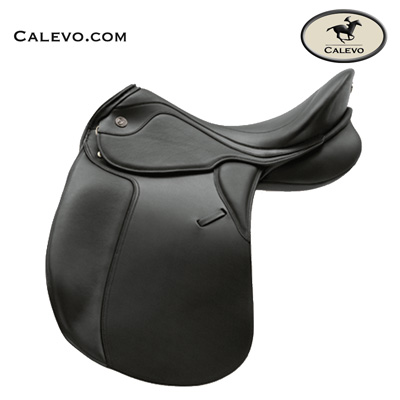
Dressage saddle without stirrups
There are 2 major categories of English saddles - jumping (all purpose and close contact fall into this category for our purposes) and dressage.  The current trend is to have brown tack for jumping and black tack for dressage.  Your bridle and stirrup leathers should match the color of your saddle.  Dressage saddles have longer flaps (the leather pieces on the side of the horse under the rider's leg), longer billets (the straps that attach to the girth) and a much deeper seat.  They often have significant knee blocks.  Jump saddles make it easier for the rider to get up and out of the seat with shorter, more forward flaps.

Each brand of saddle is a little different and they start with different shapes.  Some are very flat, some are very rounded or narrow.  There are the brands sold in retails stores and there are the higher end custom saddle brands.  Saddles can be purchased from retails
stores, saddle makers, saddle fitters and consignment shops.  Buying a saddle from a consignment shop is a great way to go if you can find the proper fit for your horse.  There's a place in New Hampshire called Pelham Saddlery.  They have an amazing selection of used saddles and will come to you with saddles for a reasonable fee which is waved if you buy a saddle from them.

The saddles sold in retail stores - Collegiate, Pessoa, Stubben, Bates - while pricey, are less expensive than custom brands such as County, Black Country and about 100 more.  A decent retail store saddle will cost between $1000 - $2000 and more.  Custom saddles are about $5000 new.  Used saddles are often not much less than new saddles, especially if they have been well maintained.  It just depends on the saddle.  A major difference, besides the custom fitting and leather quality, is the flocking or padding in the "panels" under the saddle where it rests against the horse's back.  Flocking is usually wool (it can be synthetic) and looks like it just came off the sheep's back.  It's reasonably adjustable.  Many of the retail store brands use foam, memory foam or air bags to fill the panels.  Some of the retail store brands can be converted from air bags to flocking to improve fit, comfort and adjustability.

Another thing to look for is an adjustable tree or gullet.  The tree itself isn't really adjustable.  The tree is the hard structure the saddle is built around.  The gullet plate is the metal piece at the front of the tree that can be changed.  Pessoa, Bates and others offer adjustable trees.  They have an opening that allows you to get into the construction of the saddle and use a screwdriver or allen wrench to take out one gullet plate and replace it with a wider, narrower, longer one.  This is especially useful if you will be changing horses from time to time.  Some of the custom brands have a metal piece at the crown of the tree and a good saddle fitter will be able to bend it to the shape of the horse within reason.  This is not something you can do for yourself, however,

The best thing to do when buying a saddle is to contact a saddle fitter.  I bought all my saddles before doing this.  It worked out fine but I may have made different choices if I had spoken to her first.  My daughter's first saddle was an easy purchase.  We bought a little saddle used from a friend when we leased her first pony.  The price was right but the saddle was really too small for my daughter.  When we bought her current pony, I had a woman from Dover Saddlery bring saddles to the barn to try on him.  We decided to buy both jump and dressage saddles, primarily because there happened to be an extremely well priced dressage saddle on closeout that fit both Elizabeth and her pony.  We also bought at Mattes Pad with shims to help correct the fit of the both saddles.  Her jump saddle happens to be a Pessoa but that was just the one that fit the pony the best though we do need to use the correction pad to get the fit he needs.

When it was my turn to buy a saddle, I chose a Bates saddle after trying several other brands.  The price was reasonable considering I don't own my own horse and I had read online that Bates saddles are easily converted from air pads to flocking.  It's a really nice saddle and I love riding in it.

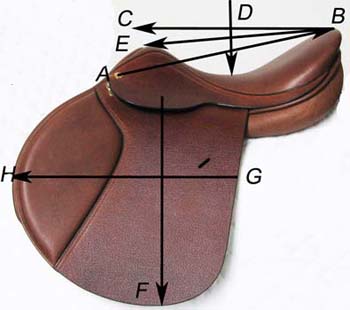
What do saddle sizes mean?  There are two main sizes - the tree size/gullet size and the seat size.  The tree which is the major structure of the saddle, can be made of wood, plastic, and other hard substances,  fits the horse and can be narrow, wide, flat, round, curved.  Every brand tends toward its own shape.  The gullet plate is the piece that can be changed in adjustable saddles, usually starting with a medium which can be changed to be narrower or wider.  As long as you buy a saddle that doesn't have an extreme tree shape, changing the gullet plate and amount of flocking can go a long way to getting a saddle to fit most horses.  The seat size ranges from 15 for a tiny children's saddle to an 18 and up for large men.  I'm 5'7" and ride in a 17" seat.  My daughter is almost 5' tall and she rides in a 16.5" seat which has a little room for her to grow.  The seat is measured by stretching a tape measure from the button to the center back of the seat (A to B in the diagram above).  If you are looking at dressage saddles, the flap length may become a factor.  The flap measurement is F in the diagram above.

About a month ago we met with a saddle fitter.  This is different than the woman from Dover who came out to try saddles on our pony for us.  The saddle fitter has taken an intensive course in England and she apprenticed to an American saddle fitting legend.  Over time she has developed her own approach and I found it fascinating to watch her work.  Her name is Diane Williams and if you are in the New England area she is wonderful.  But wherever you are, there should be good saddle fitters available to you.  This is a list of saddle fitters I found on the website of yet another custom saddle maker and Diane is on the list.

The saddle fitter will first palpate the horse's back and check for sensitivity and any issues the horse might be having.  The she will put the saddle on your horse without anything under it.  She can see if it's sitting to high or low.  She will add or remove flocking, adjust the tree.  I had her convert my Bates saddle from air to flocking and she got a great fit for the horse I ride.  As it turned out, the inexpensive Circuit dressage saddle I bought my daughter was flocked with synthetic fiber fill.  Diane pulled some out and replaced it with wool.  Again, she was able to achieve an excellent fit.  My daughter no longer needs to use the Mattes Pad with this saddle and has gone from hating riding in it to finding it extremely comfortable.  Elizabeth's Pessoa jump saddle, while very comfortable, has a foam construction.  There was nothing Diane could do for it so Elizabeth still needs to use the Mattes Pad to get a good fit on her pony which is fine, just a little annoying.  We still like Elizabeth's jump saddle and considering she will outgrow this pony and the saddle in two years, we would not have considered anything custom made.  I would, however, lean towards Bates saddles in the future.  I really do love mine, the prices are good, the leather is high quality, the tree is adjustable and they can be converted to wool flocking giving you the best of everything.

Once you buy a saddle, remember you will need to buy stirrups, stirrup pads and stirrup leathers.  Leathers come in a variety of lengths so if you are buying for a child, be sure to get short leathers.  You can always punch more holes but it's nice if they fit right off the bat.  Stirrups also come in sizes - widths.  Just pay attention to what you are buying and ask for help.  You will need a quilted saddle pad to go between the horse and the saddle to keep the saddle clean and to keep it from slipping around.  And of course you will need a girth.  We like fuzzy girths and prefer the Toklat girth for our jumping saddles.  They are washable and comfortable for the horse.  If you buy a dressage saddle, the girth will be 20 inches shorter than a jump girth, most likely black to match the saddle and the pad may need to be a bit bigger to accommodate the longer flaps.  This is a good article on choosing the proper girth.

And now that you own a saddle, you need to take care of it!  Saddles that are kept clean and conditioned will last a lifetime.  In our house we clean saddles with glycerin soap, oil the billets, flaps and leathers and condition the seat with Lexol conditioner and oil.  There are a ton of great products on the market.  Some people prefer to clean with specially designed leather cleaners such as Effax Combi. Check out your local tack store and talk to a pony clubber to find out more about serious tack cleaning.

Congratulations on your huge purchase!  Happy riding!

Kristie


Tuesday, January 14, 2014

Pony Club: What is it? Should we join?

I first heard of Pony Club when I took my daughter to a great dressage barn up in Maine for lessons a few summers ago.  The barn owner made an obscure reference to having jumped 4 feet without stirrups and all that other crazy pony club stuff but she was done jumping.  I was mystified and wondered what she meant. 

When we decided to change barns, we soon found ourselves out of our depth.  Our first barn, like most hunter/jumper barns, took care of everything for us.  I had no idea what the pony ate or when, or any idea what to do about veterinary and dental care.  They arranged all of it and I wrote a check.  On show days the instructors loaded the ponies into their trailer and drove them to the show.  It was great!  Then again, I like knowing all that stuff and doing it for myself.  When we switched to eventing, our new trainer (a past pony clubber herself) was willing to show us what to do and stand next to us as we learned but she wasn’t going to do it for us.  This was just what we wanted but it was also a little intimidating.  We needed more support, more education.  Enter Pony Club.

I often describe Pony Club to non-horse friends as Girl Scouts but you bring your pony. The United States Pony Club is divided into regions which each contain a number of clubs.  Clubs can take 2 forms.  A Center is one in which a barn, and often one particular instructor, runs a pony club at their facility for the kids who ride there.  The advantage to this model is that kids who may not have access to their own mount can participate easily.  The downside can be that the education is less broad, coming primarily from the instructor they ride with each week.  In contrast, ours is a traditional Pony Club, meaning that it has no single location.  Many of our members keep their ponies at home (any equine animal being used by a pony clubber is known as a pony, regardless of size) and most of the mothers ride as well.  We have several barns in the area that host us and one that hosts our annual August camp.  The advantage to this type of club is exposure to many instructors from multiple disciplines and the presence of experienced horsepeople in the ranks of our sponsors (what they call the parents of pony clubbers).  I suppose the downside to this model is that it’s difficult to participate fully without your own pony or your own trailer but I’ve been really impressed with the horse community in our area and how much they have done to keep kids in the program.

Pony Club provides an enriching program of education in both horse management and riding.  Over time, members achieve “Ratings” based on their proficiency in these two areas.  Pony Club originally emerged from the eventing discipline so the traditional path is heavily influenced by the skills and riding style of the eventer but there are now other paths one can take through pony club at the higher levels.  Ratings are conducted once or twice a year depending on the number of participants and the levels they are testing for.  You can think of it like a karate test for a higher belt.  The candidates are being tested against a standard.  All can pass or all can fail or there can be a mix.  Sometimes candidates pass one portion such as horse management but not another, such as the riding portion.

The ratings are as follows:

Unrated – What we call a pony clubber prior to their first ratings test.
D1, D2, D3 – D1 is the first rating attained and is pretty basic.  By the time a rider reaches the D3 they are jumping 2’3” both in an enclosed space and in an open field as well as having a pretty hefty knowledge of tack, horse anatomy, veterinary care, etc. The D3 level is the first to require a record book which includes a good deal of information about your pony - farrier and vet visits, training, costs of everything.  My daughter is a D2, hoping to do her D3 next fall. 
C1, C2, C3 – This is pretty serious stuff. I observed a C1/C2 rating conducted by a national examiner and was seriously impressed with the young women who tested (and all passed).  The C2 is jumping over 3’.  The C3 gets particularly serious with candidates switching horses for part of the riding portion.  The young women in our club who are C2’s are juniors and seniors in high school. Ratings C3 and above are conducted on the national level.
HB – This rating means you have achieved a B rating in horse management but have not yet rated a B in riding.  Some candidates prefer to do their HB first and their C3 after. 
B – The “traditional” B rating is both horse management and riding and includes all possible riding options.  There are paths that allow a person to focus on dressage riding or hunter style riding in an enclosed space without jumping in the open.
HA – Similar to HB but at a higher level of knowledge.
A – The “traditional A rating” is the highest level in pony club and must be attained by the age of 25.  It is extremely rare that a rider makes it through this rating.  Not only does the rider need to be extremely knowledgeable and capable, they need to have a horse that can jump high for them as well as for a fellow pony clubber who has never ridden their mount before.

Now that you are thoroughly confused, I’ll tell you a little about why we LOVE Pony Club.  Elizabeth and I have both made friends in Pony Club.  In the beginning I called our new friends almost daily with questions and they were always there for us.  Our club conducts 2 mounted meetings per month April through November which means Elizabeth and her friends are taking their ponies places together on a very regular basis.  The impact this has on my daughter’s connection to her pony and her confidence is enormous.  The camp our club does in August was the greatest week of Elizabeth’s life.  As horse camp goes, it’s incredibly low cost.  Parents provide the supervision and the kids do all the work.  They muck their own stalls, take turns coming early to feed and late to do night check.  They ride twice a day and have a multitude of instructors.  They even completed a 3-phase event within camp.  I loved it so much I’m in charge of camp for next year.  We love pony club because we feel like a real part of our community.  We know people now anywhere we go – to a horse show, another barn, the tack shop.  Elizabeth is passionate about horses, not just winning ribbons.  For her Pony Club is as exciting as showing, maybe more so since there is no pressure during a mounted meeting, and her ratings mean a great deal to her.  On a practical side, your Pony Club rating means something to other horse people.  When you tell someone you are a C3, they know what it means.  Your rating is a clear indication of your knowledge and your capabilities as a rider.

Pony Club is also about leadership.  The older girls in our club conduct the lower level ratings, teach unmounted meetings and mentor kids who are working on a rating.  They also act as stable managers at rallies and as such go to bat for their riders over the rules when they deem a ruling unfair – this is sometimes amusing for the adults to watch but also gratifying to see typically shy horsey girls handle themselves with strength and determination.

Did I lose you at rally and stable manager?  The other major thing we do in Pony Club is rally.  There are 5 - 6 rallies in each region each year.  A rally has a theme – dressage, show jumping, eventing, tetrathalon (don’t ask, but it involves swimming and shooting and is super fun), quiz (tests horse knowledge).  Clubs form teams of 4 – 5 riders.  Each rider is considered and scored based on their own rating so a team can have D’s, C’s and B’s all together.  There is a written test in addition to the scored riding portion of the rally which resembles a horse show.  There are also inspections of each pony and rider team and of the teams’ stabling areas.  The stable manager is a member of the team who does not ride in the competition.  The stable manager makes sure each member of the team is where they need to be and is doing what they should be doing, that their tack is clean and in order and that they are doing things in the proper order.  Awards are given for both riding and horse management.  Some rallies are "qualifying rallies" meaning that competitors can qualify for nationals and compete in a bigger pony club arena.  Every three years nationals takes place at the Kentucky Horse Park so it's pretty exciting!

My favorite part of rallying is “turn back” in which each team must clean all their tack and reorganize their stable area to absolute perfection for one final inspection before they pack up to go home.  This is a GREAT life lesson!!!!  It is so wonderful to get home to unload and be all ready for the next day because the work was done right away, especially since it is usually very late at night by that point and you've already put in a 16 hour day.

What is the commitment?  Well, like all things with horses, pretty big, but in my eyes manageable and well worth it.  I’m sure every club is different but we have one “sponsor’s” meeting a month (skipping August and December), mounted meetings in the good weather, unmounted meetings in the winter.  A member is really expected to attend most of these meetings and a parent is expected to accompany them.  If a member is working toward a new rating there will be rating prep meetings to attend as well as the rating itself.  This can be extremely time consuming.  Rallies and camp are optional but add greatly to the experience.  As kids get older and have more commitments outside pony club or are more focused on showing, they will sometimes choose not to go to camp.  Many of the rallies fall on days we have a horse show so Elizabeth only rallied once in 2013 but we hope to rally much more in the year ahead!  Financially, Pony Club is a bargain as horse activities go.  We pay dues to our local club and our national organization.  We fundraise, requiring every member to do 3 - 4 shifts at a horse show concession stand in the summer and for one parent to join them for each shift.  Each mounted meeting usually has a fee – in our club the member pays the facility use fee and our club pays the instructors, making the fundraising well worth the effort.  Rallies cost about as much to enter as a schooling show.  The big expenses are the horse and transportation which is why I bought a trailer.  I can’t imagine being in pony club without a trailer.  I have friends who do it but it would drive me crazy to never be 100% certain how I was getting anywhere. 

Pony Club teaches kids to be independent and responsible.  They learn the skills and knowledge required to be good horse custodians.  Because of the heavy parent involvement, we learn about being good custodians as well.  Since having a horsey child can take over a good portion of your time, it’s really nice to find a group of non-competitive parents to bond with on the topic.  I can’t say enough about how healthy and productive the Pony Club experience has been for us.

One of my favorite things about Pony Club is the interaction between kids of varying age groups.  Our club has kids from age 8 - 18 and you are as likely to find an 11 year old and 16 year old chatting as you are to find two kids of the same age together.  My daughter has more in common with a pony clubber two years older than her than she does with most of the girls in her class at school.  The older girls are wonderful mentors and good friends to the younger girls.  As parents we love watching them build relationships built on more than just their age or grade in school.

I could go on all day and still only scratch the surface so if you would like more information here are a few links.  Pony Club's new website has a great page for parents with some basic information.  This D Level ratings flowchart will give you an idea of what is required both in knowledge and riding skill at the first 3 levels of pony club ratings.  Whether you join Pony Club or not, if you buy or lease a pony the D Level Manual is a great resource.  We have actually found the C Level Manual to be of even greater use.  It doesn’t take long to need that little bit more information about horse management issues when you have your own pony.  Both manuals are also available from Amazon for the Kindle.  There are other awesome Pony Club books, especially if you already know a good deal about horses and just want to expand your knowledge.

For our family, the idea of having a pony and just riding it doesn’t quite work.  A pony enables our daughter to do a sport but it's not the equivalent of a lacrosse stick or hockey skates.  A pony is not just a pet but another member of the family.  Many days Pumba is Elizabeth's best friend.  They are a team and sometimes they get along and sometimes they don't.  A pony needs constant care and attention. Fortunately Elizabeth loves everything about having a pony from mucking to tacking, from riding on the flat, to going over jumps in the field (which sometimes scares her but she loves to do it anyway).  She's passionate about learning about horse illness, dangerous plants, how to wrap her pony's legs properly.  And she loves to just spend time talking to him, grooming him and giving him treats.  Buying Elizabeth a pony was a great decision and Pony Club has contributed a great deal to the happy circumstances we now find ourselves in.

Happy Pony Clubbing!

Kristie

Thursday, January 9, 2014

If I buy or lease a pony for my child, what will our time commitment look like?

So I'm kind of excited that a total stranger found my blog and asked me to give her the low down on what a week of my life as a horse mom really looks like.  I'm happy to share but caution you not to be scared off by what I tell you.  I've just been proof reading this post and warn you that it's seriously boring.  This one lacks entertainment value.  However, I think it's a pretty full and honest account of what I do as a horse mom.

The degree of insanity is, to some extent, up to you and to another extent dependent upon which discipline your child rides in and the culture of the barn she rides at.  But I will say that having a pony can give any other sport on the planet a run for its money in time and financial commitment as well as required parental involvement.  Downhill ski racing kind of comes close as does ice skating but when skiers and skaters are done they don't need to spend an extra hour caring for the animal that enabled their competition.  If their equipment gets damaged, they can buy new skis.  Not so with a pony.  Just saying.

A major factor in the amount of time I spend engaged in Elizabeth's pony activities is that she is too young to be dropped off at the barn on her own.  Sometimes I leave her there for a couple of hours to clean tack but for the most part if she's there, I'm there.  She will be so happy when she's old enough to hang out at the barn on her own and she can spend every day all summer long with her pony.  I suppose it's also fair to say I love being Elizabeth's horse mom and I like taking care of Pumba so if you really aren't into horses yourself, I'm guessing there is some lower maintenance way to go about all of this.  It may not give your child the depth and breadth of experience Elizabeth is having but that might be OK.

This time of year, being a horse mom in New England is kind of miserable.  My daughter only rides 4 days a week in the winter but most of those days I sit watching bundled in in ski pants, a down coat, mittens with hand warmers and a ridiculous but warm rabbit fur hat.  Sometimes I ride at the same time she rides which is definitely better.  Elizabeth has 2 one hour lessons per week and we have her trainer ride her pony one day per week so he works 5 days per week.  We ski with our family every weekend of the winter so this is a nice time of year in the sense that riding takes a bit of a back seat in our lives.

Monday, Wednesday, Thursday and Friday I pick Elizabeth up from school at 2:30.  Wednesday and Friday she has a lesson from 3:30 - 4:30.  They usually alternate between jumping and flat lessons and this time of year they focus on correcting problems by doing drills and exercises targeted to help both Pumba and Elizabeth fix whatever isn't working.  The other days she rides on her own or with a friend, often reinforcing what she does in her lessons.  Sometimes I set up jumps for her on non-lesson days but we do less of that in the winter.  Once in awhile we go for a walk through the woods and fields.  Riding in the indoor for months on end gets pretty monotonous.  We usually get home around 5:00.  We go away for Christmas and February break and have other people ride the pony or give him time off.  Going directly from school is the only way I can make this work.  Elizabeth has two older brothers.  I am very fortunate that they are independent, do their sports at school and have other means of getting home.  After I get home from the barn I am often back on the road taking them to karate, attending track meets and of course cooking dinner.  But I'm grateful that I have found a way to support Elizabeth while still taking care of my boys.

Winter grooming is pretty low maintenance since you can't bathe your horse.  We clipped Pumba in
October, shaving his entire body, which took me a few hours one day while Elizabeth was at school.  It took longer because I clipped a fun design onto his butt.  His coat has now fully grown back in and we just keep his chest and belly shaved during the coldest months.  We do this so that he doesn't sweat during a workout.  If Elizabeth finishes riding and he's wet and sweaty, it can take a very long time to cool him down and dry him off.  He needs to be completely dry before we blanket him for the night.  We keep a close eye on the weather and change his blankets or call the barn and ask someone to do it accordingly.  Sometimes he needs to be changed multiple times a day.  Keeping him clipped helps reduce the amount of
cooling down time needed.  I'll likely clip him more fully again in late February just before he starts to shed out his winter coat as the weather gets a little warmer.  We let his mane go a little raggedy in the winter but I do spend 30 minutes pulling it every few weeks just to keep it manageable.  You can also "roach" the mane which means to just clip it off.  If you do it early enough in the winter it will grow back in time for braiding during show season.

Pony Club is also a little quieter this time of year.  I have one parent's meeting a month in the evening.  Elizabeth has 2 unmounted meetings per month which I attend with her and where she learns about tack, horse health, safety, vet care and other horse management topics.  There are a few bigger events as well but generally a much lighter load than in the good weather.  Meetings run about 2 hours and the bigger events, being further away, take up the better part of a weekend day.

Whatever the time of year, a pony still needs visits from the farrier.  Our pony is shod every 6 weeks.  I don't have to be there but I do have to remember to leave money for the farrier and to organize lessons around his visits.  I do like to be there when our vet comes.  She generally comes out to give spring and fall shots.  Once in awhile something goes wrong and you need to bring the vet out.  We saw too much of our vet over the summer when we were borrowing the world's greatest pony from a friend.  She had some eye problems and they never resolved so we ended up sending her back to our friends' barn where they cared for her. Our vet also comes out if we are doing some type of joint treatment.  Many if not most eventing (and for that matter any other discipline) horses get some type of anti-inflammatory, joint injection or other treatment for stiffness or soreness.  The treatments range from IM injections of Adequan - which I now do myself - to IV injections of Legend or Polyglycan - which I have the vet come do - to more major procedures such as having hocks injected or blistering stifles.  (Did you read that and think what the heck does any of that mean?  Don't worry about it.  Hopefully you won't need to know any time soon and then suddenly you'll know more than you want to!) The costs and efficacy also vary but what you need to know is that active horses get sore.  Sore horses don't perform well and aren't happy.  We ask so much of our equine partners I'm pretty liberal with veterinary care to keep ours comfortable.  Of course there are a thousand other reasons for the vet to come out so make sure you maintain a good relationship with yours.

Sometime in March the ground will thaw and we will again be able to ride outside for more than just a hack in the snow.  We stop skiing and focus on riding by mid-March.  At that point, Elizabeth rides 6 days a week.  Our plan this season is for her to stick with 2 lessons per week.  As the season progresses the lessons start to focus on whatever Elizabeth has coming up the following weekend.  Shows start in April and she will likely have either a show, pony club mounted meeting, pony club rally or an outing to go XC schooling somewhere every weekend from April through October.  She competes in both dressage shows and eventing 2 and 3 phase shows and so far all have been schooling shows though one of her goals for the end of this season is to go to a rated show.  After a big outing or show the pony always gets a day off.  In August her pony club hosts a camp at a nearby barn and she rides twice a day with different instructors.  We plan to bring the pony with us to Maine for vacation weeks this summer.  We have a house there and found a barn nearby where we can rent short term stall space.

During a typical week in the show season I will pick Elizabeth up from school everyday at 2:30.  She will ride on her own or in a lesson.  If she has a show or pony club rally (I'll explain in my pony club post) we will stay at the barn late the night before to bathe the pony, clean tack, prepare the trailer.  I braid her pony for her but soon she will learn to do it herself because it takes me 1 - 2 hours, I get faster as the season progresses.  If she just has a pony club meeting or is going schooling we don't have as much prep work.  Once we get to the summer, Elizabeth likes to wash her pony pretty often, at least once or twice a week.  We hose him off after every ride in the good weather and let him graze while he dries.

On show days we get to the barn at least an hour before we need to depart.  I hook up the trailer while Elizabeth gets her pony from his paddock.  We check him over to make sure he didn't roll and get filthy or lose a braid.  We usually have a plan so if her first event is at 10am we want to be at the show before 9am to park, unload, check in, change, warm up.  Our shows are usually pretty close by and I always leave a significant time cushion so for a 10am start 20 minutes from our barn we will leave our barn around 8am.  A show day starts early and ends late.  That's all there is to it.  But at least we are usually home for dinner.  When competing in eventing and dressage, riders are given a time slot for each phase or test so you have a pretty good idea how long your day will be before you get started.  Hunter shows are more like swim meets making for a really long day with classes sprinkled throughout the day.  A pony club rally starts even earlier and ends much later.  We only rallied once last year but I don't think we got home until after 10pm.  In addition, rallies usually warrant a separate rally prep meeting so the kids can work with their rally team to make sure they have everything they will need on rally day.

Pony club mounted meetings are the best!  These, along with pony club camp, are Elizabeth's favorite.  She gets to ride in a relaxed atmosphere with all her friends.  I get to hang with the other moms and total time in for a mounted meeting is really only about 3 - 4 hours with trailering and everything.  Camp was a big time commitment but so worth it.  Monday morning of camp week we trailer over with everything Elizabeth owns and set up her stable for the week.  Parents take 2 - 3 half day chaperone shifts during the week.  We took a turn feeding one morning because Elizabeth really wanted to do it so that day we arrived at 7am.  After feeding all the horses Elizabeth took care of her own pony and tack.  The kids all participate in a Wednesday night jumper show the week of camp so that day we are there late.  Friday afternoon is all about packing up and returning to our home barn, unpacking and going home exhausted.  This year I'm in charge of camp so I'll be spending even more time there which is fine with me!

Our pony club does a fundraiser in the summer.  We run a concession stand during the Wednesday night jumper shows at the barn that hosts our camp.  Every family is responsible for 4 three hour shifts during the season and the pony clubber is expected to work as well as their parent.

Pony Club ratings are a big deal and take serious preparation.  For the most part they are a test of the things you should be doing every day, a rider should not be rating above their everyday activity level.  However, there is still a good deal of time spent preparing for both the horse management and riding sections, cleaning tack, calming nerves.  A pony clubber won't necessarily do a rating every year.  Elizabeth did 2 last year and hopes to be ready to do another in the fall.  We organize study groups and focus some lessons on the standards.

Last summer we engaged in 2 pony hunts so that was a MAJOR time suck.  Now that we are settled in with a great pony, things are very manageable.  If your pony gets injured, all bets are off.  There may be no riding, there may be visits from the vet or trailer trips to an equine vet clinic.  There may be a search for a short term lease to get your rider through their season if they have become very competitive.  It's difficult to predict life with horses.

I think that's it!  I suppose there are other things like a million trips to the tack shop trying different blankets and saddles until you find the right one, buying new show clothes every season and just checking out what's new because it's super fun and we love the people who work there!  We spend time at home reading about riding and Elizabeth puts a ton of time into studying her pony club horse management.  In all honesty the pony has come to dominate my life as well as my daughter's but I've never been happier.  We have so much fun doing this together.  Instead of going through adolescent mother-daughter angst, we are a team.  I'm right next to her to share in the highs and lows (there are plenty of both).  I am so lucky to be doing this with my daughter and even more blessed with all the friends we have made at our barn and in our pony club.  I wouldn't trade this for anything.

So, in a nutshell, we spend about 10 hours a week riding in the winter (including driving to and from the barn) in addition to a variety of minor maintenance and grooming activities.  Late March through mid-November we spend closer to 15 on just riding and probably another 5-10 hours a week on prep and outings.  So, this is my job.  In fact, I quit my job as a pattern maker - my dream job I might add - in order to be able to support Elizabeth's interest in horses.  It was a tough decision but one I would make again.

I hope this helps.  If you had 10 other horse moms tell you about their weeks you would get 10 different answers.  Some kids go to schools with equestrian sports so that's often much simpler.  Some barns don't mind you dropping off kids younger than 14 - though I do think there is often an insurance issue.  I know many kids who had to wait to get their first horse until they were old enough to be at the barn alone.  If your child is interested in horses and you are willing to give it a go, you will find the right approach and balance for your family's life.

Best of luck!
Kristie


Wednesday, January 8, 2014

I have a pony, do I need a trailer?


The short answer is no.  You don't really NEED a trailer, but then did you NEED a pony?  It really depends on what you are doing with the pony.

Our first barn was very accommodating.  Not only did they drive our pony to all the shows my daughter attended, they were the ones to get up, load the trailer and get to the show grounds crazy early.  We got at least an hour or two of extra sleep as a result.  If we wanted to go somewhere, they could usually drive us and their fee was very reasonable - $75 roundtrip locally.  Shows, however, were limited to the shows they were going to as a barn.

When we changed barns, we had to find some other way to get where we were going.  One of the first things I noticed at our current barn was the huge number of trailers littering the property.  It was my first clue I might be in trouble.  There are transport companies out there and often someone is going the same place at the same time and can give you a ride.  I have friends who have supported equestrian daughters for years without buying a trailer, usually paying someone to drive them which can be very expensive - a ride to and from a long show day can be $200, more if it's far away.

I, however, am a control freak.  I like to know where I'm going, how I'm getting there and limit the probability for error.  I like making my own schedule, coming and going to horse shows when it makes sense for me, not when it makes sense for my ride.  I liken being at our barn without a trailer to living in the country, working in town and not having a car.  Our neighbors are all very nice and if they are going our way with a space, we are welcome to it, but on that day it just doesn't work out, what do you do?  Once we had a pony it felt like we needed a way to fit him into our car.  Our pony is another member of the family.  If you have 3 kids you buy a car with 5 seats.

Then again, as another horse mom recently reminded me, what works for one of us isn't necessarily what works for another.  I'll share my advice but you'll need to figure out for yourself if a trailer is in your future.  Here are some questions to ask yourself in trying to decide if you "need" a trailer:

  1. How many times a month would you use a trailer?  If it's 1 or less, you might hold off.
  2. Do you intend to take your pony anywhere other than the shows your barn is going to already?
    1. Are you joining Pony Club? (I'll post about Pony Club very soon to help you make this decision!) This is ultimately what pushed us.  With 2 mounted meetings a month in addition to an active show schedule, we needed a way to take our pony places pretty frequently.
    2. Do you intend to do some XC schooling (riding outside of shows) at courses other than the one available at your barn?  We did quite a bit of this last summer and I was really glad to have a trailer.  As plans and schedules changed a million times I didn't have to call my ride once a day with a change of plan.
  3. How likely is it that your horse situation is going to last?  You might try to make do for the first year you lease/own.  I would have waited if we hadn't changed barns and joined pony club.
  4. Do you have a friend who is ready to buy a trailer?  I know some people who sort of "share" a trailer because their kids are always doing the same things.  One family owns the trailer and the other buys gas.
  5. Do you have the proper vehicle for pulling a trailer?  This is not a deal breaker since you can always get a different car but it can get very expensive and will be a factor in making your decision.
If after thinking through this list you conclude that yes, I must have a trailer, then you are ready to think about what type and size trailer you need and whether you want to buy new or used.
Gooseneck Trailer

There are two types of trailers: Gooseneck and Bumper Pull.  A gooseneck has an extension on the front that goes over the flatbed of a pickup truck.  The truck has a hitch in the middle of the bed to which the trailer attaches.  A bumper pull attaches to the more traditional hitch point at the back of your car under the bumper.

Next you need to think about size and features.  Horse trailers are broken into categories by how many horses they carry, whether or not they have a dressing room (something worth considering) or living quarters (likely unnecessary but whatever floats your boat) and how they are loaded - slant or straight, ramp or step-up.  All of these things come down to personal preference.

Layout option for slant load trailer.
A slant load is a trailer in which the horses are set at an angle to the side of the trailer.  They are "slanted" when you are driving straight down the road.  These trailers usually have windows for the horses on the side of the trailer.  A straight load, conversely, has the horses parallel with the side walls of the trailer.  They usually load in from the back and face forward as you drive but there are many variations depending on the number of horses you carry.  For instance, a 2 horse will usually load from the back and have the horses facing front.  But a 4 horse might load from the side and have 2 horses on either side of the entry point, 2 facing forward and 2 facing back. 

Layout options for a 4 horse trailer.
Ramp Load and Step Up are exactly what they sound like.  A ramp load has a ramp that you lower to the ground and the horse ascends the ramp to enter the trailer.  A step up has no such ramp.  The horses just step on the way we get into a car.  

Trailers also have different kinds of dividers in them.  There can be a half wall or just an 8" plank like piece dividing the stalls at about shoulder height.  I like the wall because the horses can't kick each other and it allows me to store stuff on the empty side if I'm only carrying one horse but I know a lot of people who prefer not to have a wall so the horses have more room to spread their legs out to brace for turns.

A dressing room may sound like a silly thing to anyone who hasn't owned a trailer but don't write it off too quickly.  If you have your own trailer, you and your child will be getting to the barn early, hooking up, cleaning out shavings, putting in new shavings, hanging fresh hay, filling water bottles, loading tack, etc.  Even if you did much of this the night before there is a good deal of work to be done on the morning of a show and the rider is not going to want to do it in their show clothes.  When you get to the show and your rider needs to change, where is she going to do it?  If you are like my husband, you will say she can change in the now empty trailer.  He can say this because not being the parent to go to shows he is ignorant of how dirty the trailer is and how difficult it is to keep your show clothes clean while changing in there.  The alternative is changing in the car.  Not a lot better and an option that will get more complicated as our daughter gets bigger.  But by the time I was buying a trailer and a new car to pull it, I could tell the dressing room was pushing my luck so I backed off.  

Most trailers with dressing rooms have saddle and bridle racks in the dressing rooms.  We added such racks to the interior of our 2 horse bumper pull straight ramp load trailer.  Ours is pretty big inside and we mostly pull ponies so there is actually plenty of space for our muck bucket, tack trunk and tack.  Since our tack is in with the horses, we invested in saddle covers, helmet and bridle bags to keep things clean in transport.

Next you need to think about whether you will buy new or used.  This is when you need to think about your budget.  My sense is that trailers, especially those made by Kingston, Hawk and Featherlite, really hold their value.  A 2007 trailer sells used for close to what it cost new in 2007 in part because the new 2014 trailers are so much more expensive (I've kind of found the same to be true of good used saddles).  So you save money with the used trailer but not as much as you might think.  And resale value can be important, especially if you are buying a smaller trailer with fewer bells and whistles and planning to upgrade in a few years if all goes well.  We bought a 2007 Kingston from a wonderful horse mom in Connecticut.  The trailer looked completely brand new and she even gave me some driving lessons.  We got a great deal paying $6500.  Even though it was in great shape, I spent an additional $1000 having it serviced and adding racks before we used it.  When you buy a used trailer you should plan to take it to a local dealer to have the brakes, tires and wheel bearings checked.  

That reminds me.  Horse trailers have brakes.  The brakes are hooked up to your car and you will need an electronic braking system.  The car we had when we bought the trailer did not have one so we had one installed.  We went to a local trailer place, not a horse trailer place necessarily but one that could install a controller quickly so I could drive down to pick up my trailer.  The system cost about $350 installed but we should have spent a little more and gotten the higher end digital unit with more adjustment.   If I had it to do again, I would go to a bigger trailer shop and one that had some experience with horse trailers.  The unit is installed under the dash right where your knees like to be when driving so you have access to adjust it easily and your husband can frequently curse you for having a horse trailer that makes driving uncomfortable for him.

A month after buying the trailer, I bought a new car.  My 2011 Honda Pilot could pull the trailer but it didn't feel very good.  We were well under the 4400 pounds our Honda was certified to pull.  Our trailer weighs 2500 pounds and our pony was only 800 pounds.  There are different weight measurements you will see in your car manual about gross vehicle weight and what not.  I focused on tow capacity and that seemed to be a sufficient data point for determining the best vehicle for pulling my trailer.  Most trailers I am interested in are between 2500 and 3500 pounds.  If I have 2 big horses that's an additional 2200 pounds.  Add in a little tack, water, I'm guessing the most I will ever want to pull is 6000 - 6500 pounds.  Pick up trucks are great for this, especially a Ford F-150 or Chevy Silverado 1500 or Doge Ram which can tow 12,000 pounds, but I wanted an SUV that could do double duty as my people mover (I have 2 sons who want nothing to do with horses).  The best choices seemed to be the Chevy Tahoe and the Ford Expedition which can each tow around 9000 pounds (consumer reports does a good job with testing vehicles' tow ratings).  A Suburban would also be a good choice but I had recently downsized from a Suburban and didn't want to go back.  One of the things I really liked about my Expedition was that it had the electronic braking system integrated into the vehicle itself, installed at the factory.  So when I hook up my trailer, the digital readout in my dashboard acknowledges the trailer and tells me the level my brakes are set at. I LOVE LOVE LOVE towing with this car!!!!!!  You will see people towing horse trailers with all kinds of cars.  This is another one of those cases where what works for me does not necessarily work for you.  But I think this is something the owner of our old barn had in mind when she told me I would wreck my car if I bought a trailer.

So, where does one buy a trailer?  I found mine on equine.com.  You can create an account, then create a search with detailed criteria and save the search.  I would go back every day or two to see if there was anything new to look at.  There are new and used trailers listed on the site.  You can try Craigslist but I found the listings on equine.com were a better fit on average.  You can also go to your local dealer who will likely carry both new and used trailers.  There are several near where I live.  Many people around here use Yered.  I had mine serviced at Orchard.  Ask around the barn and at the tack shop and you'll find out where you should go.  If you are near Ohio or Massachusetts, attend the Equine Affaire.  They host an AMAZING horse trailer display.  It's so fun to run around dreaming about having a huge motorhome with seating for your entire equine family.

A few more things to keep in mind as you are looking at trailers.  
  • There are several shapes out there.  The trailers with really square fronts create more drag than those with rounded or pointed front ends, impacting gas mileage.  
  • Horses and all their stuff are really dirty.  It won't look new for long!
  • Even if you only have a pony now, are you likely to have a big 17 hand warmblood in a few years?  Probably not but think about it before buying the smallest trailer you can find.
  • My only pet peeve with my trailer has to do with the rings on the side of the trailer.  During a show, you will tie your pony to the trailer and hang a hay net for them to munch on.  The rings on our trailer are really low.  I am planning to take it in to have another one added higher up so the hay net doesn't hang so low.
  • Buy a muck bucket, muck rake, really good broom and shovel just for the trailer.  If you can, put a small trunk in the trailer and keep some basic supplies in it such as fly spray, baby wipes, bit wipes, water buckets for drinking and sponging, sponges, a big water tank in case water is unavailable where you are going and an extra medical armband if you have an eventer.  Nothing worse than getting somewhere to go schooling or to a show and not being able to participate because you left your armband at the barn.
  • I see trailers out there without windows.  That seems weird to me.  On a hot day I love opening all the windows and even latching the upper half of the back totally open for the drive home so the pony can have some air.
  • Practice driving your trailer!  It's great if you can buy a trailer from a place that will give you lessons.  It's really not that hard to drive one if you practice a little bit.  Be sure to learn how to back up and how to park so you don't embarrass yourself at a horse show.
  • I found the information on this site extremely helpful in learning about safe trailer driving.
  • You should also have a professional check the hitch you have for pulling a trailer.  Not all hitches are rated to pull the significant weight associated with horse trailering.  You want to make sure that the ball is the right diameter, the drop the correct height and the weight rating high enough for the load you intend to pull.
  • My dream Hawk 2 horse with dressing room is around $13,000 new right now just to give you an idea of cost.
I'm so excited for you to go get your trailer and become a mobile horse parent!  Happy trailer shopping!
Kristie


Friday, January 3, 2014

Dressage, Hunters, Eventing - What's the difference and why do I care?

First of all, I have to admit that I'm still fuzzy on some of this.  I now have a pretty good handle on dressage and eventing levels but when it comes to the hunter/jumper stuff, I'm often deeply confused.  But this overview should help you get started.  I refer to schooling and rated shows several times.  A schooling show is just that, it is for the education of the horse and or the rider and is where a kid should start his or her competitive career.  Rated shows have different levels but they are overseen by the governing body of the discipline being performed, offer a higher level of competition and professionalism, and the opportunity to accrue points toward different goals in different disciplines.


Dressage is a style of riding on the flat that requires horse and rider to perform a predetermined series of movements in a formal "test".  In competition, the quality of each movement is scored and the rider in any division with the highest score wins.  Any score over 70 is pretty amazing.  Dressage is not the greatest spectator sport but it is an incredibly difficult discipline and in some way the purest form of riding.  If a rider can master the seat, which is straighter than that of a hunter/jumper, and aides - rein, weight and leg - taught in dressage they will be far more capable of doing other things with their horse such as jumping big fences.  Dressage builds a horse's muscles, it's sort of like going to the gym to lift weights and run for a football player.  It teaches a horse to bring its hind legs underneath its body and move with greater balance.  Dressage can be likened to horse ballet and is every bit as difficult to master as human, classical ballet.  Dressage competition levels start with Introductory then move to Training, 1st Level, 2nd Level, 3rd Level, 4th Level and then I get lost.  Freestyle tests incorporate musical routines and can be ridden at all levels.  There is something called a Grande Prix test and other than knowing it is beyond me in every sense I don't really know what it is.


Eventing incorporates 3 phases into one competition which can be referred to as combined training, horse trials or 3-day eventing (though only the highest level events take place over the course of 3 days).  The first phase is dressage.  The tests in eventing differ slightly from those in pure dressage but incorporate the same types of movements.  Dressage is there to demonstrate the true ability of both horse and rider.  The dressage score in eventing is a little different with a lower score being better than a higher score.  This is achieved by subtracting the actual dressage score from 100.  A score of less than 40 is good and under 30 is amazing.  The second phase in most horse trials is Show Jumping or Stadium.  A rider is given a course of jumps and a time in which to jump them.  If they go clean - make it over every fence without knocking anything down - and within the time, the move on with no penalties.  If they go over time (or under the minimum time), faults are added to their score from dressage and likewise if they take down a rail, miss a jump or have a refusal.  If they fall off, they are disqualified.  The third phase is Cross Country and involves a course of natural and man made obstacles laid out over a path through fields, woods and water.  Again the goal is to get around clean in the time allotted.  Eventers don't have to look good in the jumping stages.  They just need to stay on and get over the fences in the time allowed.  As you get to the higher levels, though, it would be strange to see anyone doing well in dressage that didn't look pretty amazing going over fences.  The jumping seat in eventing is much more back and in the saddle than in other disciplines primarily because when going cross country eventers encounter drops (these links bring you to photos of what I'm talking about), hills, ditches, they gallop over rough ground and change trajectory from uphill to downhill to over a huge wall very quickly.  You can't stay on a horse if you are leaning forward on its neck while going down a drop.  At the end of the day, the rider in each division with the lowest score wins.  A rider "finishing on their dressage score" is one who incurred zero penalties in the show jumping and cross country stages.  Eventing is not the discipline of choice for kids who like lots of ribbons.  The maximum possible number of ribbons on any given day is one and it is anything but guaranteed.  The goal for young eventers is to make it through the day still in the competition.  This discipline requires bravery, resilience and toughness to a higher degree than most other disciplines which makes sense since it used to be a test of our cavalry officers and has in more recent years developed into a civilian sport.  Having made the switch with my daughter from hunters to eventing I encourage you as a parent not to underestimate the extraordinary difference between jumping in a fenced arena and doing so out in an open field and galloping (even trotting) through woods all alone.  The levels in eventing: Pre-Elementary, Elementary and Tadpole are offered only at the schooling show level.  Rated horse trails include Beginner Novice, Novice, Training, Preliminary, Intermediate and Advanced.  Then they get into something to do with stars and CCI which I don't understand at this point but since that is all at least 10 or 20 years away for my daughter if she even makes it that far I figure I'll know it by the time we get there!  In order to compete at Preliminary and above, a rider must accrue a specified number points at the previous level in rated shows.  Higher levels also have age requirements.


Hunters/Jumpers/Equitation - These are actually 3 distinct disciplines at the higher levels but they have similarities and for kids all start at the same place.  Here's an oversimplification that I'm sure I'll get in trouble for but you have to start somewhere.  In hunter classes the horse is judged and in equitation classes the rider is judged.  Of course both horse and rider are judged in both to some degree and if the rider isn't riding well in a hunter class then the horse is unlikely to do well.  One thing you will hear as a parent of a young hunter is the term "lead change".  This has to do with which leg is in front during the canter.  As a horse bends it should be the inside leg that comes forward at the beginning of the stride.  So if turning to the left, the left front leg should be visibly out in front as the horse canters.  This is a big deal in the hunter world and is the reason you will pay more for a pony or horse with "auto changes" meaning the animal pretty much hands it to your child on a silver platter.  Some will have strong changes that are not automatic so they need an indication from the rider but get their changes pretty easily.  In lower levels a rider can do simple changes which means they break to the trot, then pick up the canter on the new lead.  Many many many ponies and horses just don't have great lead changes.  They can often be ridden in the hunters but to do well will need a super strong rider who can give them very clear and consistent signals.  There are lots of other little nitpicky things judges look at and similar to dressage they keep a score sheet during the ride.  Hunter and equitation classes can take place over fences or on the flat.  Equitation on the flat, though having a different seat and not presenting a preset test, is most similar to dressage.  An equ rider will be focused on how she sits on the horse and perfecting her aides. In the flat class a group of horses will enter the ring at the same time.  The judge will ask the riders to walk a particular direction, trot, canter, etc.  At the end of the class the riders line up and ribbons are awarded.  A rider will likely enter an entire division which will have 4 - 8 or more classes in it with champion and reserve champion ribbons being given for the highest scorers at the end of the division.  A division can included both flat classes and classes over fences.  For the jumping classes each rider enters the ring on their own, jumping a set course and being judged differently depending on if they are riding a hunter or equitation class.  In this discipline, one terrible class doesn't necessarily ruin your whole day, depending on how many classes you entered.  In some sense the scores in hunters and equitation are subjective and a judge can play favorites for a variety of reasons.  Sometimes they just love the particular look of a particular pair.  In that case it's just tough luck if you aren't the lucky pair.

Jumpers is more like the stadium segment in eventing and it is scored objectively.  Form is sort of irrelevant.  Jumpers are getting around a complex course of jumps in an enclosed ring within an allotted time.  Those who make it enter a jump off which is a shorter course of jumps.  The fastest time with the fewest rails down wins.

Additionally there are pony classes and points and medals.  I have no idea what medals are but they have to do with particular medal classes.  Over a show season a rider can earn points at every rated show they go to.  I know many kids who want a great pony with lead changes so they can make it to pony finals.  At some point I'll add a blog post from one of my hunter jumper friends so they can explain all this more fully.

In the Hunter/Jumper world there is an opportunity to compete on a team which I think is great!  To some extent the hunter/jumper world is more cut throat and the price of your horse has a good deal to do with your level of success.  Of course there are exceptions.  With the IEA teams I think some of the more negative aspects dissipate.  Many barns as well as boarding schools have Interscholastic Equestrian Association teams beginning in 6th grade.  Many of the kids who ride on these teams go on to ride on collegiate equestrian teams.  IEA sometimes offers kids an opportunity to compete who would not otherwise be able to do so because the school or barn will have a team of horses the riders use for the season.  My sense is that IEA barns are extremely kid friendly and more comfortable with kids being dropped off for riding than eventing barns where on average the riders are older.

Within the world of English riding there are some other fun events people participate in and I've only recently become familiar with them.  There are hunter paces in which a cross country style course is laid out.  Course planners set an ideal time for getting over the course.  Riders go out in groups, unaware of the ideal time that has been set.  The group that finishes closest to the ideal time wins.  There are as many penalties for riding too fast as there are for riding too slow.  A hunter derby is a hunter/jumper class in which riders jump over cross country style obstacles in an enclosed arena.  They are timed, not judged, thus making the derby more like Jumpers.  I think derby cross is similar to a hunter derby.  There are several in our area but having never participated I can't be sure.  Both derby type sports are an attempt to give spectators a more exciting event with greater opportunity to watch - typically it is very difficult to watch cross country in an event since it takes place over a great distance.  Many equestrians also participate in an old fashioned hunt.  The hunt in our area does not involve a fox.  A scent is laid, the hounds go after it and everyone has a jolly good time bounding through fields and over fences.  I have to say the whole thing appeals to me in the sense of community it creates among horse people.  It's the one time huge numbers of local horse people gather not to compete in the show ring but to enjoy riding together.

There are a million other horse sports I'm sure but if you have a horse crazy kid, the disciplines I mentioned are probably the ones you need to know about.  I don't know anything about western disciplines and then you have all the specialties like Morgan Horses and Quarterhorses, both of which have great organizations and publications.

I'll leave you with a couple of more realistic photos of competition - my daughter in her inaugural 3 phase event where she competed at the elementary level with jumps up to 2'3".  The dressage portion was ridden in costume so I've included a dressage shot from earlier in the season.  In costume she is dressed as Timone aboard her pony Pumba - show name Hakuna Matata!

Happy Showing!
Kristie